
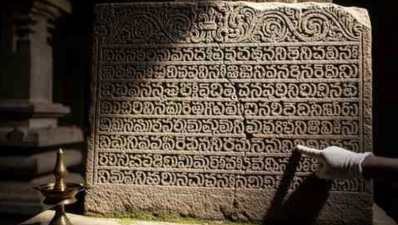
A Telugu medieval inscription linked to the Gajapathi rulers of Odisha has been discovered on a stone pillar at the Lakshmi Narasimha Swamy Temple in Ramachandrapura Agraharam, Guntur. The find marks strong historical and cultural links between Odisha and the Andhra region during the late medieval period. The inscription is engraved on both sides of a pillar in the temple mandapa and refers to Kumaraguru Mahapatra, an officer under Gajapathi ruler Purushottama Deva of the 15th century CE.
Inscription and Historical Context
The inscription was originally dedicated to Lord Mulasthana Mallikarjuna of Kondaveedu. It was later relocated to the Guntur temple along with the mandapa structure. The text mentions ritual arrangements for the deity, including the offering of milk during evening worship. It also refers to the custody of cows used for ritual service, indicating organised temple administration.
Link with Kondaveedu and Odisha
A related Odia inscription survives at the Narasimha Temple in Kondaveedu. That record mentions Srichandana Mahapatra, another officer of the Gajapathi ruler, donating the village of Panapasa for Amruta Manohi Seva. The presence of similar names and records in both regions suggests administrative and religious connections across the Gajapathi domain, especially in present-day Ganjam, Visakhapatnam, and parts of Andhra Pradesh.
Temple Tradition and Relocation
Local temple tradition states that the idol of Lord Narasimha was brought from Kondaveedu Fort after invasions in the region. The mandapa pillars were also shifted from Kondaveedu. The temple priest’s family has served the deity for nearly 200 years. Such oral traditions, together with inscriptions, help trace the movement of sacred objects and temple structures across regions.
Significance for Regional History
The inscriptions reflect the Hari-Hara mode of worship under the Gajapathi rulers, who patronised both Shaiva and Vaishnava traditions. They offer evidence of shared religious practices, temple patronage, and cultural exchange between Odisha and Andhra Pradesh. Such epigraphic records are valuable sources for studying medieval polity, temple economy, and regional integration.
Last Modified: April 29, 2026