
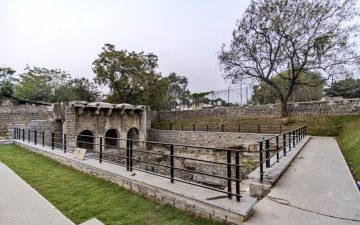
The Adikmet Stepwell, a 300-year-old water structure located on the Osmania University campus in Hyderabad, was restored and inaugurated on World Heritage Day in 2026. The stepwell, dating back to the 18th century, had been buried under approximately 3,000 tonnes of garbage before restoration efforts began.
Stepwell Architecture in India
Stepwells are traditional water storage systems designed to access groundwater through a series of steps descending to the water level. They are primarily found in arid regions of India, such as Gujarat, Rajasthan, and Telangana. Stepwells served both functional and social purposes, providing water for drinking, bathing, and irrigation, as well as spaces for community gatherings.
Historical Significance of Adikmet Stepwell
The Adikmet Stepwell is part of Hyderabad’s layered water heritage, reflecting the engineering and architectural practices of the 18th century. Stepwells from this period often feature intricate stone geometry and were constructed to manage water scarcity in the Deccan region. The Adikmet Stepwell’s design includes illuminated contours that highlight its structural features.
Restoration Efforts and Collaboration
The restoration of the Adikmet Stepwell took three years and was carried out by the Society for the Advancement of Human Endeavour in partnership with the Telangana government. Financial support was provided by Dodla Dairy. The project was led by architect Kalpana Ramesh, founder of The Rainwater Project, and gallerist Annapurna Madipadig.
Water Heritage Conservation in India
Water heritage conservation involves preserving traditional water structures like stepwells, tanks, and canals to maintain sustainable water management practices. These structures are recognised for their historical, architectural, and environmental value. Restoration projects contribute to cultural preservation and promote awareness of ancient water conservation techniques.
Last Modified: April 19, 2026