
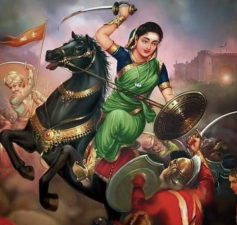
Rani Velu Nachiyar, the 18th-century queen of Sivaganga in present-day Tamil Nadu, was remembered on her birth anniversary for her resistance to British colonial rule, military leadership and administrative vision. She is widely regarded as the first Indian ruler to organise armed struggle against the British East India Company. Her life remains an important reference point in India’s early anti-colonial history and in the study of women-led resistance.
Who Was Rani Velu Nachiyar
Rani Velu Nachiyar was born on 3 January 1730 in Ramanathapuram. She was the only child of Raja Chellamuthu Vijayaragunatha Sethupathy and Rani Sakandhimuthal. Raised like a prince, she received training in warfare, horse riding, archery, Silambam and Valari. She was also a scholar and knew Tamil, English, French and Urdu.
Conflict With the British East India Company
In 1772, Sivaganga was invaded by the British East India Company, backed by the son of the Nawab of Arcot. In the Kalaiyar Koil war, her husband, Muthuvaduganathaperiya Udaiyathevar, was killed. Velu Nachiyar then fled with her daughter and spent years in exile, rebuilding her strength and planning retaliation.
Military Strategy And Victory
During exile, she formed alliances with Hyder Ali of Mysore and Gopala Nayaker. With their support, she raised a strong army, including a women’s battalion. Her adopted daughter, Udaiyaal, is remembered for sacrificing her life by destroying a British ammunition depot. In 1780, Velu Nachiyar recaptured Sivaganga from the British, becoming the first Indian queen to defeat the East India Company in battle.
Legacy In Indian History
After regaining her kingdom, she focused on governance and later handed power to her daughter Vellachi. She died on 25 December 1796 in Sivaganga. Her life symbolises courage, tactical skill, women’s leadership and early resistance to colonial rule.
Last Modified: April 25, 2026