
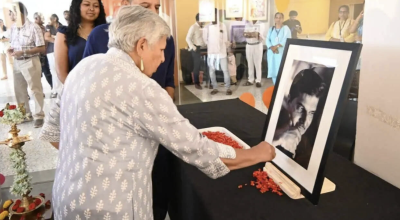
India Post released a special philatelic tribute on May 3, 2026, in Goa to commemorate the birth centenary of Mario Miranda, the iconic Indian cartoonist and painter born on May 2, 1926. The commemorative release included a special postal cancellation and a set of four picture postcards capturing his distinctive artistic style. Alongside this postal honor, a centenary exhibition titled “Mario at 100” opened in Bengaluru, showcasing 110 of his original drawings, cartoons, and illustrations. These simultaneous events celebrate his lasting influence on Indian visual culture and social satire.
Biographical Profile and Artistic Journey
Early Life and Education
Mario de Miranda was born in Damão (now Daman) in Portuguese India to a Goan Catholic family. He spent his early childhood at his ancestral home in Loutolim, Goa, a setting that later became the primary inspiration for his art. He completed his Bachelor of Arts at St. Xavier’s College, Mumbai, and initially studied law before transitioning fully to professional cartooning and illustration.
Career in Journalism and Media
Miranda did not receive formal training in art. He began his career by sketching everyday observations in personal diaries. His professional breakthrough came when his work appeared in national publications. His illustrations reached a wide audience through long-standing associations with prominent media houses:
- The Times of India: Served as a political and social cartoonist, capturing the changing urban landscape of Bombay (now Mumbai).
- The Illustrated Weekly of India: Contributed extensive travelogues, character sketches, and cover designs.
- Current and Femina: Provided regular satirical columns and lifestyle illustrations.
Iconic Characters and Thematic Elements
Representation of Goan and Bombay Life
Miranda’s artwork is easily recognized by its crowded, dynamic layouts and detailed backgrounds. His illustrations focused on two distinct geographic subcultures. He documented Mumbai’s bustling offices, local trains, and monsoons, while simultaneously capturing the relaxed, village-centric lifestyle of post-colonial Goa, featuring its taverns, traditional weddings, and parish priests.
Famous Character Creations
He created a series of fictional, satirical characters that regular readers could easily identify:
| Character Name | Description and Social Satire |
| Miss Fonseca | The quintessential, glamorous Anglo-Indian secretary navigating a chaotic Mumbai corporate office. |
| Minister Bundaldass | A satirical caricature of an opportunistic, thick-skinned, and corrupt politician. |
| Moonswamy | The overly subservient, traditional south Indian personal assistant to Minister Bundaldass. |
| Pockettoon Characters | Anonymous citizens representing the daily struggles of the common middle-class urban resident. |
Public Murals and Permanent Installations
Beyond print media, his artwork was scaled up into public installations. He painted murals on the walls of iconic Mumbai establishments like the Cafe Mondegar in Colaba. In Goa, his large-scale tile murals decorate the Panaji market, the Margao railway station, and the domestic terminal of the Goa International Airport.
Philatelic Release Details
Components of the 2026 Tribute
The Department of Posts, under the Ministry of Communications, structures its historical commemorations through specific postal artifacts. The tribute for Miranda consisted of two main elements:
- Special Cancellation: A unique postmark designed with a pictorial element representing Miranda’s signature art style. This postmark was applied to mail at the Panaji Head Post Office on the day of release, permanently devaluing the stamp for collectors.
- Picture Postcards (Pack of Four): A curated set of postcards featuring his illustrations of historic Goan architecture, traditional dances, and caricature montages.
Role of Philately in Cultural Preservation
Philatelic releases function as official state tools for documentation. The Department of Posts utilizes commemorative stamps, first-day covers, and special cancellations to archive national history, honor prominent personalities, and promote regional heritage globally through the international postal network.
IASPOINT Booster Facts for UPSC
- Civilian Honors: Mario Miranda was posthumously awarded the Padma Vibhushan, India’s second-highest civilian award, in 2012 for his contributions to Art. Prior to this, he received the Padma Bhushan in 2002 and the Padma Shri in 1988.
- International Recognition: In 2009, the Government of Portugal awarded him the Order of Prince Henry (Comendador), a prestigious national order of knighthood, recognizing his work in bridging Indo-Portuguese cultural history.
- Special Cancellation vs. Commemorative Stamp: A commemorative stamp is a limited-edition postage stamp sold for a short period. A special cancellation is a unique postal marking or ink stamp used by a post office to mark mail on a specific date to celebrate an event, often issued alongside postcards even when a new adhesive stamp is not printed.
- The e-Philately Portal: India Post manages a dedicated e-commerce platform called the National Philatelic Museum portal to help global collectors buy commemorative items, supporting the Philatelic Deposit Account (PDA) system started to encourage the hobby among youth.