
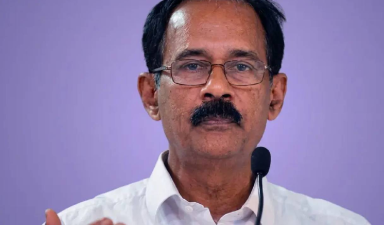
Dijo Kappan, a prominent consumer rights activist and anti-corruption crusader from Kerala, passed away on May 1, 2026, at the age of 68. He was undergoing treatment at a private hospital in Pala, Kottayam, for injuries sustained in a road accident in Thiruvananthapuram in October 2025. Kappan transitioned from active student politics to grassroots civil advocacy, establishing institutional mechanisms to protect citizens from corporate and bureaucratic exploitation. His interventions shaped the consumer rights landscape, transport safety standards, and public utility accountability across Kerala.
Evolution of Consumer Activism in Kerala
Political Transition to Social Advocacy
Dijo Kappan began his public career in student politics during the early 1980s. He served as the General Secretary of the Kerala University Union in 1982 and as the State President of the Kerala Students Congress from 1983 to 1985. He later held the position of State President of the Youth Front. In 1998, Kappan formally exited electoral politics to dedicate his work entirely to non-partisan consumer and farmer rights protection.
Institutional Framework
In 1988, Kappan founded the Centre for Consumer Education in Pala, Kottayam. Operating as a registered trust, the centre became the primary vehicle for his legal battles. It provided free legal aid, documented public grievances, and filed over two dozen successful Public Interest Litigations (PILs) in the High Court of Kerala and the Supreme Court of India.
Key Judicial Interventions and Legal Battles
Public Utility Accountability
Kappan challenged public sector monopolies to ensure fair pricing and service delivery. He led legal agitations against arbitrary electricity tariff hikes by the Kerala State Electricity Board (KSEB) and contested unscientific road tax revisions. His petitions sought to link utility pricing directly with service efficiency and consumer welfare standards.
Urban Management and Safety
The Centre for Consumer Education intervened in local governance crises and public safety hazards:
- Waste Management: Kappan filed litigations addressing the municipal solid waste crisis in Kochi, including the environmental mismanagement at the Brahmapuram waste plant.
- Roadside Advertisements: He successfully argued against the proliferation of illegal hoarding boards on public roads, citing visual pollution and structural hazards to motorists.
- Montblanc Advertisement Case: Kappan achieved national recognition by legally challenging a luxury brand’s unauthorized use of Mahatma Gandhi’s image. He cited violations under the Emblems and Names (Prevention of Improper Use) Act, 1950.
Transport and Insurance Sector Reforms
Public Transport Protection
Kappan served as the president of the Public Transport Protection Committee. In this role, he advocated for structural reforms in the Kerala State Road Transport Corporation (KSRTC). His efforts focused on maintaining affordable fare structures, expanding rural connectivity, and improving commuter safety amenities.
Insurance Claim Simplification
Following his involvement in civil safety advocacy, Kappan launched a prolonged campaign against bureaucratic hurdles in processing third-party insurance claims. His advocacy pushed insurance companies and transport authorities to streamline documentation, eliminate systemic delays, and expedite compensation payouts for road accident victims and their families.
Infrastructure Advocacy
As the president of the Sabari Railway Central Action Council, Kappan campaigned for the execution of the Sabari Railway project to improve rail connectivity to the Sabarimala pilgrimage site. He linked infrastructure delays directly to economic losses for local consumers and farmers.
Legislative Framework for Consumer Protection in India
The rights defended by consumer activists are protected under a structured national legislative framework.
The Consumer Protection Act, 2019
Replacing the older 1986 legislation, this Act established the Central Consumer Protection Authority (CCPA) to regulate matters relating to violation of consumer rights, unfair trade practices, and false or misleading advertisements.
Six Core Consumer Rights
The legal architecture recognizes six distinct rights for every citizen:
| Consumer Right | Functional Definition |
| Right to Safety | Protection against products and services that are hazardous to life and property. |
| Right to be Informed | Access to facts needed to make an informed choice, including quality, quantity, potency, purity, and price. |
| Right to Choose | Assurance of access to a variety of goods and services at competitive prices wherever possible. |
| Right to be Heard | Guarantee that consumer interests will receive due consideration at appropriate forums. |
| Right to Seek Redressal | Right to seek remedies against unfair trade practices or exploitation. |
| Right to Consumer Awareness | Right to acquire the knowledge and skill to be an informed consumer throughout life. |
IASPOINT Booster Facts for UPSC
- The Emblems and Names (Prevention of Improper Use) Act, 1950: This central legislation prohibits the unauthorized use of specified emblems, official seals, and names—including the name and pictorial representation of Mahatma Gandhi—for commercial and professional purposes.
- Central Consumer Protection Authority (CCPA): Established in 2020 under the Consumer Protection Act, 2019, the CCPA possesses an investigative wing headed by a Director-General to conduct inquiries into consumer rights violations.
- Three-Tier Adjudication Mechanism: India features a quasi-judicial system for consumer disputes consisting of District Consumer Disputes Redressal Commissions (up to ₹50 lakh), State Consumer Disputes Redressal Commissions (₹50 lakh to ₹2 crore), and the National Consumer Disputes Redressal Commission (above ₹2 crore).
- World Consumer Rights Day: Observed globally on March 15 every year to raise awareness about consumer rights. National Consumer Rights Day is celebrated in India on December 24, marking the day the Consumer Protection Act, 1986, received presidential assent.
- Public Interest Litigation (PIL) Origin: The concept of PIL was introduced in India by Justice P.N. Bhagwati and Justice V.R. Krishna Iyer in the late 1970s, relaxing the traditional rule of locus standi to allow any public-spirited citizen to approach the court on behalf of marginalized groups.