
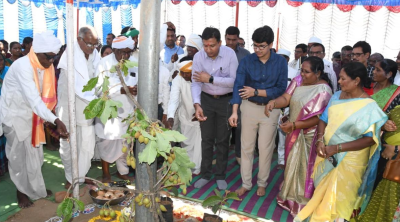
The Mahua Flower Festival, locally known as Ippa Puvvu Panduga, was celebrated on April 30, 2026, in Jamidi village within the Adilabad district of Telangana. Organized by the Integrated Tribal Development Agency (ITDA), Utnoor, the event highlights the socio-economic relationship between tribal communities and non-timber forest produce. The festival marks the annual harvest of the mahua flower, which serves as a primary source of seasonal income and nutritional sustenance for indigenous groups like the Gonds and Pradhans. Government officials used the platform to train collectors in scientific harvesting methods to prevent forest degradation.
Socio-Economic Profile of the Mahua Tree
The Mahua tree (Madhuca longifolia) is a tropical tree species endemic to the Indian subcontinent, thriving primarily in the dry deciduous forests of central and peninsular India.
Flowering Cycle and Harvest Dynamics
The economic cycle of mahua depends entirely on its seasonal reproductive patterns:
- Harvest Window: The flowering season spans from mid-March to late April, aligning with the lean agricultural period in rural India.
- Yield Potential: A mature Mahua tree yields approximately three quintals (300 kilograms) of fresh flowers and seeds per season.
- Household Income: The collection and initial sale of these flowers generate seasonal revenues ranging between 3,000 and 6,000 Indian rupees per tribal family. This income acts as a critical fiscal buffer before the arrival of the monsoon cropping cycle.
Geographical Distribution in India
Mahua forests are heavily concentrated across specific tribal belts, making the resource central to India’s rural forest economy.
| Primary States | Associated Tribal Communities | Key Collecting Hubs |
| Telangana | Gonds, Pradhans, Kolams, Nayakpods | Adilabad, Komaram Bheem Asifabad, Bhadrachadri Kothagudem |
| Chhattisgarh | Baigas, Gonds, Murias, Abujhmaris | Bastar, Surguja, Dantewada |
| Madhya Pradesh | Bhils, Gonds, Korkus | Chhindwara, Mandla, Betul |
| Odisha | Santhals, Kondhs, Juangs | Mayurbhanj, Keonjhar, Rayagada |
Industrial and Nutritional Applications
Mahua is a versatile natural resource used across multiple traditional and modern industrial sectors.
Traditional and Dietary Uses
The sugary, nutrient-dense corollas of the mahua flower are consumed fresh, dried, or cooked with items like tamarind and jaggery. Tribal families use dried mahua to maintain food security during droughts. In the 2022 festival held in the Sirikonda mandal of Telangana, the state highlighted mahua-based nutritional supplements designed to counter anemia and improve maternal health parameters among tribal women.
Distilling and Biofuels
The high fructose and glucose content makes mahua flowers an ideal substrate for fermentation. Tribal households brew a traditional country liquor used in social rituals, marriages, and religious ceremonies. On a commercial scale, the oil extracted from mahua seeds is utilized in soap manufacturing, grease production, and as a feedstock for biodiesel production to promote renewable energy.
Scientific Harvesting Protocols
Traditional harvesting often involves setting small fires at the base of the tree to clear leaf litter, which frequently causes uncontrollable forest fires. The ITDA now promotes alternative green collection methods:
- Using clean nylon nets spread beneath the tree canopy to catch falling flowers automatically.
- Employing solar-dryers instead of open-ground drying to prevent contamination from dust and microbial pathogens.
- Organizing local collectors into Primary Forest Produce Societies to secure direct market linkages.
State Initiatives and Minimum Support Price Scheme
The collection, processing, and sale of Mahua fall under the regulatory framework of state and central forest departments to prevent exploitation by middlemen.
Tribal Cooperative Marketing Development Federation (TRIFED)
TRIFED includes Mahua flowers and seeds under its Minimum Support Price (MSP) for Minor Forest Produce scheme. This ensures a guaranteed price floor for tribal gatherers, protecting them from market price volatility.
Van Dhan Vikas Kendras
Under the PM Van Dhan Yojana, the government sets up value-add centers in tribal clusters. These units help tribal women process raw mahua into high-value commercial items like jams, squashes, cookies, and herbal teas, boosting their household profit margins.
IASPOINT Booster Facts for UPSC
- Minor Forest Produce (MFP): Defined under Section 2(i) of the Scheduled Tribes and Other Traditional Forest Dwellers (Recognition of Forest Rights) Act, 2006. It includes all non-timber forest produce of plant origin, such as bamboo, brushwood, stumps, cane, tussar, cocoons, honey, wax, lac, tendu leaves, medicinal plants, roots, and tubers.
- Madhuca longifolia: The scientific name of the Mahua tree. It belongs to the Sapotaceae family and is highly drought-resistant, making it a critical species for social forestry and wasteland reclamation programs in arid regions.
- Integrated Tribal Development Agency (ITDA): An administrative body set up under the Fifth Schedule of the Indian Constitution to manage and implement accelerated socio-economic development programs within designated Scheduled Areas.
- Geographical Indication (GI) Tag Status: Distinct traditional beverages derived from local forest produce, including certain regional variants of Mahua liquor, have been put forward by tribal state corporations for GI tag protection to develop regulated export markets.