
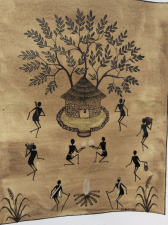
Kurumba painting, a prehistoric tribal art form from the Nilgiris, has drawn renewed attention after the posthumous Padma Shri awarded to artist Krishnan Raghavan, known as Kitna. The honour has brought into light both the cultural value of the art and the vulnerability of the Alu Kurumba community, one of Tamil Nadu’s Particularly Vulnerable Tribal Groups (PVTGs). It has also raised concerns over the survival of the art form, its practitioners, and the community’s living conditions.
What Kurumba Painting Represents
Kurumba painting is an indigenous visual tradition linked to the Alu Kurumbas of the Nilgiris. It is believed to be over 3,000 years old. Traditionally, it was painted on rocks, cave walls, and dwelling surfaces in the high hills. The art depicts community life, rituals, forest knowledge, and hunting practices. Natural pigments are extracted from forest materials such as tree bark, leaves, red sand, and charcoal.
Krishnan Raghavan’s Contribution
Krishnan was born in Vellarikombai in Kotagiri and learnt the art from his maternal grandfather. He later adapted the tradition from rock surfaces to cloth, canvas, and paper. His works documented:
- Social life of the Alu Kurumbas
- Marriage, menarche, funeral, and ancestral rituals
- Daily life, cultivation, and honey collection
His style is now described by scholars as the Krishna school of Kurumba art. He also trained students and non-tribal learners, helping the art reach wider audiences.
Threats to the Art Form
Today, fewer than 10 indigenous practitioners remain, and only a few know how to prepare the traditional colours. Activists fear that the art may disappear without urgent support. They have called for official recognition of living artists, financial assistance, and a visual anthropological record of Krishnan’s works. The community also wants a Geographical Indication tag to prevent misuse by outsiders.
Government Response and Future Needs
After the Padma Shri announcement, the Tamil Nadu government announced support for Krishnan’s family, including a permanent job for his wife. Community leaders have urged certified courses, stipends for learners, and stronger state-level recognition. The case has become an example of how tribal heritage can survive only through timely support, documentation, and intergenerational transmission.
Last Modified: April 29, 2026