
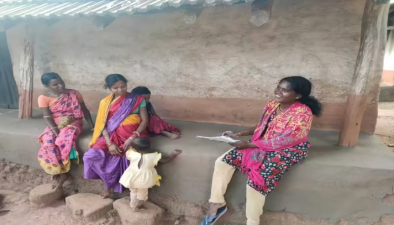
A teenage girl from Talabaruda village in Odisha’s Keonjhar district has emerged as a local changemaker by challenging child marriage, poor hygiene practices and weak awareness of maternal and adolescent health. Her work shows how community-led action can improve health and social outcomes in tribal areas. The village belongs to the Juang community, a Particularly Vulnerable Tribal Group, where traditional norms strongly influence daily life.
Community Context in Talabaruda
Talabaruda is a forested Juang village with around 5,000 people. The Juangs live across parts of Keonjhar and Dhenkanal districts. Their settlements have long depended on forests, kinship networks and traditional customs. In such settings, social practices often change slowly. Early marriage, limited health awareness and hesitation around modern hygiene practices remained common concerns.
Role of the Jiban Sampark Programme
The change began through Jiban Sampark, a UNICEF-supported initiative implemented with local partners. The programme focused on:
- Maternal and adolescent health
- Nutrition and immunisation
- Sanitation and hygiene
- Community mobilisation through local workers and youth
It gave Sumitra information and a platform to speak within her own community. This helped her move from learner to messenger.
Local Actions and Behavioural Change
Sumitra began visiting schools and encouraging girls to take iron and folic acid tablets. She urged pregnant women to attend Village Health, Sanitation and Nutrition Day sessions and immunisation camps. She also promoted sanitary pad use, infant feeding practices and handwashing with soap. Her efforts helped bring more women to health sessions and encouraged girls to speak against child marriage.
Significance for Tribal Development
The initiative led to visible change in village behaviour. Adolescent girls in the village achieved full immunisation coverage, reflecting progress at the local level. The case marks that development in remote tribal areas is more effective when local youth lead the message. It also shows how trust, repeated dialogue and community ownership can shift long-held social norms.
Last Modified: April 28, 2026