
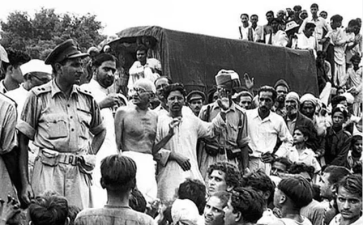
The 108th anniversary of the Champaran Satyagraha marks a turning point in India’s freedom struggle. Launched in 1917 in Champaran district of Bihar, it was Mahatma Gandhi’s first major experiment with Satyagraha in India. The movement emerged from the suffering of indigo farmers forced by British planters to grow indigo under the oppressive Tinkathia system.
Background of the Movement
Champaran peasants were compelled to cultivate indigo on a fixed portion of their land and sell it at unfair rates. This system caused severe economic hardship. Local farmer Raj Kumar Shukla repeatedly urged Gandhi to visit the region and study the issue. Gandhi agreed and reached Champaran to investigate the grievances of the farmers.
Gandhi’s Intervention
Gandhi conducted a detailed inquiry into the conditions of the peasants. He defied British orders to leave the district and chose non-violent resistance as the method of protest. His presence encouraged farmers to speak openly about exploitation and gave the issue national visibility. The movement became an early example of organised civil disobedience in colonial India.
Outcome and Significance
The British authorities were forced to set up an inquiry committee, with Gandhi as a member. The investigation exposed the injustice of the indigo system. By 1918, the forced indigo cultivation system was abolished. The success of the movement secured relief for farmers and established Gandhi as a mass leader.
Legacy in Indian Freedom Struggle
Champaran Satyagraha demonstrated the power of non-violent protest against colonial oppression. It became a model for later peasant movements and national agitations. The event also strengthened the link between rural grievances and the wider freedom movement, making it a foundational moment in modern Indian history.
Last Modified: April 28, 2026