
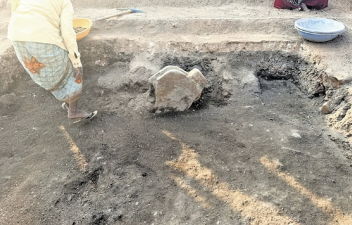
Lakkundi in Karnataka’s Gadag district has emerged as archaeological site after excavations near the Kote Veerabhadreshwar temple uncovered relics dating back to the Neolithic period. The discovery has strengthened efforts to secure UNESCO World Heritage status for the historic temple town, long known for its wells, temples, inscriptions and Chalukya-era heritage.
Archaeological Significance
The excavation began on 16 January on the temple premises in Lakkundi, about 12 kilometres from Gadag town. The site has yielded relics from the Neolithic period, indicating much older human activity than previously brought into light in the village’s medieval records. The findings add a new layer to Lakkundi’s historical importance.
Historic Importance of Lakkundi
Lakkundi, earlier known as Lokkigundi, is mentioned in 11th and 12th century inscriptions and was once compared to Amaravati for its wealth. It served under the Chalukyas, Yadavas and Hoysalas, and was the capital of Hoysala ruler Eradane Ballala in 1192 AD. The village was also known for its mint, or tankashale, and for its association with Queen Attimabbe, a noted patron of Jainism.
Heritage Restoration Efforts
The excavation is part of a wider plan to restore Lakkundi’s buried monuments and wells. In 2024, the Karnataka State Tourism Development Corporation and the Archaeology, Museums and Heritage Department collected 1,050 historical relics from households and identified 13 inscriptions. An open museum is being developed with local support, and the heritage authority is studying the inclusion of more temples and structures in the protected list.
UNESCO Nomination Push
The State government is working on a proposal to place Lakkundi and nearby monuments on UNESCO’s tentative World Heritage list. INTACH has been engaged to refine the proposal. Lakkundi currently has seven ASI-protected monuments, while 16 temple structures have been declared protected by the State. A proposal to shift parts of the village to aid restoration is also under consideration, subject to excavation and survey findings.
Last Modified: April 27, 2026