
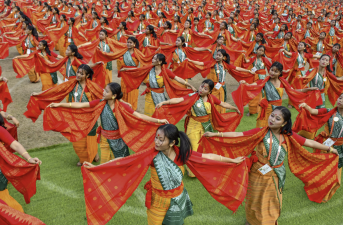
Prime Minister Narendra Modi participated in Bagurumba Dwhou 2026 at Sarusajai Stadium, Guwahati, a major cultural event showcasing Bodo heritage. The programme featured a synchronised performance by more than 10,000 artists from the Bodo community, with participation drawn from 81 Assembly constituencies across 23 districts of Assam. Bagurumba, a nature-inspired folk dance, remains closely linked to Bodo identity, peace and collective harmony.
Bagurumba Dwhou 2026
Bagurumba Dwhou 2026 was organised as a large-scale celebration of Bodo culture. The event brought into light the community’s artistic traditions through mass participation and coordinated dance performances. It also served as a platform to present Assam’s cultural diversity on a larger stage.
Bodo Cultural Significance
Bagurumba is traditionally performed by young Bodo women, with men accompanying as musicians. The dance uses gentle, flowing movements that reflect butterflies, birds, leaves and flowers. It is associated with festivals such as Bwisagu and Domasi. The dance symbolises peace, fertility, joy and harmony with nature.
Recognition of Assam’s Heritage
The event was presented as part of wider efforts to give Assam’s art and culture greater national recognition. Recent cultural milestones in the state include the national prominence of Bihu celebrations, the inclusion of Charaideo Moidam in the UNESCO World Heritage list, and official recognition for the Assamese and Bodo languages. Such measures have strengthened cultural pride and visibility.
Development and Peace in Bodoland
The programme also reflected the post-accord transformation of the Bodoland region. The 2020 Bodo Peace Accord helped reduce conflict and encouraged youth to move towards education, sports and cultural activities. Development initiatives have included educational institutions, healthcare facilities, roads, and welfare structures. The event underlined the link between peace, identity and development in Assam.
Last Modified: April 27, 2026