
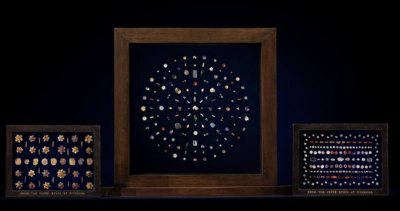
India has inaugurated a major exposition of the sacred Piprahwa relics linked to Bhagwan Buddha at the Rai Pithora Cultural Complex in New Delhi. The display, titled The Light and the Lotus – Relics of the Awakened One, brings together relics repatriated after more than a century and places them before the public as part of a wider effort to preserve Buddhist heritage.
Piprahwa Relics and Their Significance
The Piprahwa relics were discovered in 1898 and are among the earliest and most important relic deposits associated with early Buddhism. Archaeological evidence links the Piprahwa site with ancient Kapilavastu, widely identified with the region connected to Buddha’s early life. The relics hold high historical, religious and archaeological value.
Repatriation After 127 Years
The exposition marks the reunification of relics preserved in the National Museum, New Delhi, and the Indian Museum, Kolkata. Their return follows sustained government effort, institutional coordination and public-private partnership. The relics had reportedly been placed in the international market, and their recovery was treated as a matter of national heritage protection.
India’s Buddhist Heritage Push
The event reflects India’s broader focus on Buddhist civilisational links. The government has been modernising Buddhist sites, improving pilgrim facilities and supporting the global promotion of Buddhist heritage. It has also accorded classical language status to Pali, the language associated with many of Buddha’s teachings, to widen access to Buddhist texts and traditions.
Heritage, Culture and Public Access
The exposition is intended to strengthen public engagement with India’s spiritual and cultural legacy. It also underlines the role of museums, archaeology and heritage conservation in safeguarding sacred objects. The initiative places Buddhist relic preservation within the larger framework of cultural diplomacy and civilisational continuity.
Last Modified: April 25, 2026