
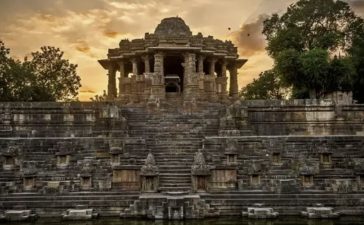
Prabhas Patan in Gujarat preserves important epigraphic and archaeological evidence linked to the history of Somnath Temple. A 12th-century inscription, now protected by the State Department of Archaeology, marks the region’s religious, political and cultural importance during the Solanki period. The record is associated with the medieval reconstruction of Somnath and reflects the wider heritage of the Prabhas region.
Historic Significance of Prabhas Patan
Prabhas Patan was a major centre of religion, architecture and literature under Solanki rule. The area is closely associated with the Somnath Temple, one of the most prominent sacred sites in western India. Copper plates, inscriptions and memorial stones from the region help reconstruct its ancient and medieval past.
The Bhadrakali Inscription
The inscription is dated to 1169 CE, corresponding to Valabhi Samvat 850 and Vikram Samvat 1255. It is described as a eulogistic record of Param Pashupata Acharya Shriman Bhavabrihaspati, the spiritual preceptor of Maharajadhiraj Kumarapala of Anhilwad Patan. The inscription is preserved near the Prabhas Patan Museum area and is embedded in the wall of the ancient Bhadrakali Temple courtyard.
Somnath Temple in Historical Memory
The inscription refers to the legendary construction of Somnath Mahadev across four yugas. It states that Soma built it in gold in Satya Yuga, Ravana in silver in Treta Yuga, Shri Krishna in wood in Dvapara Yuga, and King Bhimdev Solanki in stone in Kali Yuga. Historical tradition also links Kumarapala with the fifth temple at the same site in 1169 CE.
Heritage Value and Preservation
The Prabhas Patan Museum, functioning from the ancient Sun Temple, preserves inscriptions, copper plates and remains associated with destroyed temple structures. These relics are important for understanding Gujarat’s medieval heritage, temple architecture and the cultural memory of Somnath. The site continues to symbolise devotion, resilience and historical continuity.
Last Modified: April 26, 2026