
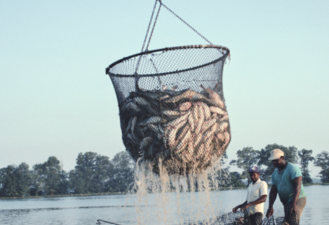
The Union Government has allocated ₹2,500 crore for the fisheries sector under the Pradhan Mantri Matsya Sampada Yojana (PMMSY) in the Budget Estimates for 2026–27. This is the highest allocation so far under the scheme. The increase reflects continued budgetary support for fisheries infrastructure, production growth and livelihood improvement for fishers and fish farmers.
Rising Budget Support for Fisheries
The allocation under PMMSY has shown a steady rise in recent years. It stood at ₹2,352 crore in 2024–25 and increased to ₹2,465 crore in 2025–26 before reaching ₹2,500 crore in 2026–27. The scheme is a key central initiative for the development of the fisheries and aquaculture sector.
Support for Tamil Nadu Under PMMSY
During the last five financial years from 2020–21 to 2024–25, projects worth ₹1,240.95 crore were approved for Tamil Nadu under PMMSY. The central share in these projects was ₹479.73 crore. Of this, ₹202.05 crore has been released to the state so far for implementation. In 2025–26, the Centre released ₹50 crore to Tamil Nadu in April 2025. An additional ₹20 crore was released in February 2026 after a request from the state government. This took the total central release for the year to ₹70 crore. Tamil Nadu has utilised ₹48.32 crore of these funds.
Key Components of the Scheme
PMMSY provides support for:
- Purchase of fishing boats and nets.
- Upgradation of fishing vessels.
- Financial assistance during the annual fishing ban period.
- Sea cage farming and seaweed cultivation.
- Ornamental fish farming and pearl farming.
The scheme also promotes mariculture, training and capacity-building for modern fishing practices.
Sustainable Fisheries and Coastal Livelihoods
The scheme supports artificial reefs in coastal areas to replenish fish stocks and restore marine ecosystems. It also encourages climate-resilient and alternative livelihoods for coastal communities. These measures are aimed at ensuring sustainable fishing practices and improving long-term income security for traditional fishers and small-scale fish farmers.
Last Modified: April 28, 2026