
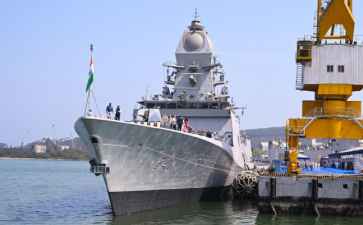
INS Taragiri, the fourth Project 17A stealth frigate, was commissioned into the Indian Navy at Visakhapatnam on 3 April 2026. Built by Mazagon Dock Shipbuilders Limited and designed by the Warship Design Bureau, the warship marks another step in India’s push for indigenous naval capability, advanced shipbuilding, and maritime security.
Project 17A Stealth Frigate
INS Taragiri is a multi-role frigate with a displacement of about 6,670 tonnes. It has been built with more than 75% indigenous content. The ship uses stealth features to reduce radar signature and improve survivability in contested waters. It is part of the Project 17A class, which represents a major upgrade over earlier frigate designs.
Combat and Operational Features
The frigate is equipped for high-speed transit and long-duration deployment at sea. Its systems include modern radar, sonar, and missile suites. Key weapons and sensors support anti-surface, anti-air, and anti-submarine warfare. The ship is also designed for maritime security, anti-piracy patrols, coastal surveillance, and humanitarian assistance missions.
Strategic Significance for India
The commissioning reflects India’s emphasis on self-reliance in defence manufacturing. The ship has been developed through cooperation between public sector units, MSMEs, and the wider domestic industrial base. It also marks the growing role of Indian shipyards in the global supply chain. With India’s long coastline and dependence on sea routes for trade and energy, a strong navy remains central to national security.
Legacy and Indian Ocean Role
INS Taragiri carries forward the name of the earlier Leander-class frigate commissioned in 1980. The new vessel joins the Eastern Fleet and strengthens India’s presence in the Indian Ocean Region. Its commissioning underlines the Navy’s focus on being combat-ready, credible, cohesive, and future-ready in a changing maritime environment.
Last Modified: April 28, 2026