
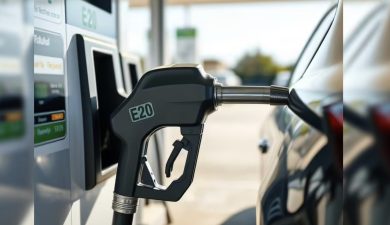
India has proposed amendments to the Central Motor Vehicles Rules to allow higher ethanol-blended fuels, including E85 and E100. The draft notification was issued by the Ministry of Road Transport and Highways in 2026, after India reached the E20 ethanol-blending target in petrol in 2025.
Ethanol Blending in Petrol
Ethanol blending refers to the mixing of ethanol with petrol in fixed proportions. E20 contains 20% ethanol and 80% petrol, E85 contains 85% ethanol, and E100 refers to nearly pure ethanol fuel. India’s Ethanol Blended Petrol programme has operated as part of the national biofuel policy framework. The programme uses ethanol from feedstocks such as sugarcane juice, sugar syrup, damaged foodgrains, and surplus rice under approved supply chains.
Proposed Fuel Categories
- E85 is a flex-fuel blend with 85% ethanol and 15% petrol.
- E100 is a high-ethanol fuel used in vehicles designed for near-pure ethanol operation.
- Flex fuel vehicles can operate on multiple ethanol-petrol blends, usually from low blends up to 100% ethanol.
Vehicle Compatibility and Standards
Vehicles manufactured between 2012 and March 2023 were generally built for E10 compatibility. Vehicles produced from April 2023 were made E20 material compliant, and vehicles sold from April 2025 were expected to be fully E20 compatible. Higher ethanol blends require fuel-system compatibility, updated testing norms, and changes in engine calibration. Brazil has used flex-fuel vehicles and separate fuel dispensers for different blends.
Policy and Energy Context
India imports a large share of its crude oil requirement, and ethanol blending forms part of the import-substitution strategy. The EBP programme has been linked with annual crude oil savings of about 4.5 crore barrels and foreign exchange savings of around ₹1.65 lakh crore. NITI Aayog has examined fuel-efficiency changes in vehicles adapted from E10 to E20 use. The assessment cited a possible 1–2% mileage drop in some older vehicles.
Automobile Industry and Future Rollout
The automobile industry has sought tax incentives for E10 and E20 fuels. The government has also discussed updated testing norms for commercial production of flex-fuel vehicles. Public feedback on the draft rules will be considered before final notification under the Central Motor Vehicles Rules. The proposal covers fuel standards, vehicle certification, and compatibility requirements for higher ethanol blends.
Last Modified: April 29, 2026