
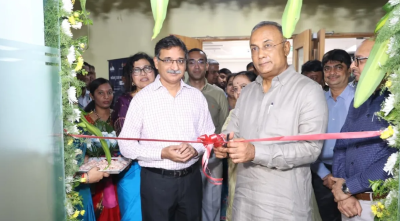
Karnataka launched a specialized Health Emergency Operations Centre in Bengaluru on 7 May 2026 to systematically manage public health crises. Inaugurated by the state Health Minister, this facility operates as a 24-hour command and coordination hub during disasters, epidemics, and medical emergencies. The facility functions under the Pradhan Mantri Ayushman Bharat Health Infrastructure Mission, a Union Government initiative designed to build healthcare capacity across India. By adopting operational frameworks from the World Health Organization, the centre addresses institutional gaps exposed during the COVID-19 pandemic, making Karnataka one of the first major Indian states to run an advanced public health emergency facility.
Administrative Framework and Inter-Agency Coordination
Institutional Leadership
The facility operates under the direct supervision of the Department of Health and Family Welfare. Dr. Indira Kabade serves as the State Nodal Officer for emergency response. She oversees daily tracking data and coordinates emergency actions during a public health crisis.
Multi-Sectoral Integration
The core purpose of the facility is to eliminate communication delays between separate government bodies. The centre links multiple agencies onto a single communication grid:
- Department of Health and Family Welfare
- State Disaster Management Authority
- Home Department (State Police Services)
- Fire and Emergency Services
- Revenue Department (for district-level administration)
Technological Infrastructure and Operational Capabilities
Real-Time Monitoring Systems
The facility uses centralized digital tools to track health data across Karnataka’s 31 districts. High-resolution video walls display live epidemiological maps, hospital bed availability, and vaccine distribution tracks. Real-time dashboards pull data from rural health centers, allowing officials to detect disease clusters before they spread.
Communication Infrastructure
The command hub features dedicated satellite and IP-based video conferencing systems. These systems provide uninterrupted communication with district collectors, government medical colleges, and the Union Health Ministry during extreme weather events or network failures.
Public Health Objectives and Emergency Response Protocols
Epidemic and Pandemic Mitigation
The centre serves as the primary data collection point for integrated disease surveillance. It monitors outbreaks of vector-borne diseases, influenza variants, and water-borne pathogens, ensuring rapid deployment of medical supplies and medical teams to affected zones.
Disaster Medicine Management
During natural disasters like floods or landslides, the hub coordinates the medical evacuation of patients. It tracks the inventory of life-saving drugs, blood banks, and mobile medical units to ensure affected populations receive immediate care.
Comparative Structural Analysis of Emergency Frameworks
| Operational Feature | Health Emergency Operations Centre (HEOC) | Traditional State Disaster Management Centers |
| Primary Focus | Public health, epidemics, medical supply chains | General rescue, rehabilitation, law and order |
| Technical Guidelines | World Health Organization (WHO) Frameworks | National Disaster Management Authority (NDMA) Rules |
| Data Inputs | Electronic health records, disease registries, hospital logs | Weather telemetry, seismic data, civic distress calls |
| Core Personnel | Epidemiologists, public health experts, doctors | Bureaucrats, police officials, military personnel |
IASPOINT Booster Facts for UPSC
Pradhan Mantri Ayushman Bharat Health Infrastructure Mission (PM-ABHIM)
Launched in October 2021, PM-ABHIM is one of the largest pan-India schemes for strengthening healthcare infrastructure. It targets filling critical gaps in public health infrastructure, especially in critical care facilities and primary care centers in both urban and rural areas. It supports the creation of National Institutes for One Health, regional research platforms for the WHO South-East Asia Region, and biosafety level labs.
WHO HEOC Framework
The World Health Organization recommends that member states establish Health Emergency Operations Centres as a core capacity under the International Health Regulations (2005). A certified HEOC must integrate six structural elements: plans and procedures, physical infrastructure, information systems, human resources, financial resources, and administrative support.
International Health Regulations (2005)
The IHR is an instrument of international law that is legally binding on 196 countries, including all WHO Member States. It requires countries to report specific disease outbreaks and public health events to WHO, building collective global capacity to detect, assess, and respond to public health risks.
Disaster Management Act, 2005
This national legislation set up the institutional framework for disaster management in India. It led to the creation of the National Disaster Management Authority (NDMA) headed by the Prime Minister, and State Disaster Management Authorities (SDMAs) headed by respective Chief Ministers. The Act covers natural and man-made disasters, providing legal backing for asset procurement and emergency funds during crises.
Last Modified: May 19, 2026