
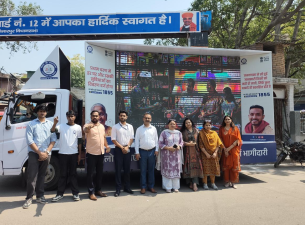
The Office of the Registrar General of India and the Directorate of Census Operations, Delhi, launched a 15-day awareness campaign on 7 May 2026 for the first phase of Census 2027. Running until 21 May 2026, this campaign educates the public about the upcoming house listing and housing census operations. This phase records every household and logs available civic amenities across the region. Delhi Lieutenant Governor Taranjit Singh Sandhu and Chief Minister Rekha Gupta participated in the initial self-enumeration exercise. This campaign sets the baseline for the first digital-heavy census operation in the country.
Phased Implementation and Timeline
Self-Enumeration Stage
The self-enumeration stage commenced on 1 May 2026 across areas under the Municipal Corporation of Delhi (MCD) and scheduled to conclude on 15 May 2026. This stage allows citizens to log into a secure government portal to fill out their household and amenity data independently. This process reduces the time required during subsequent physical visits by government officials.
Door-to-Door Field Operations
Following the self-enumeration stage, physical field operations will start on 16 May 2026. Enumerators will conduct door-to-door visits to verify self-reported data and collect pending details. This fieldwork targets approximately 45,000 designated house listing blocks within the National Capital Territory of Delhi.
Outreach Methods and Campaign Strategy
Mobile Outreach Vehicles
The Directorate of Census Operations deployed six specialized mobile outreach vehicles to run the public awareness campaign. These vehicles travel along planned routes to cover 180 high-density locations across Delhi over the 15-day campaign window.
Public Engagement Tools
The mobile units use diverse communication methods to explain the census process to citizens, including:
- Interactive audio sessions led by campaign coordinators.
- Public quizzes based on census trivia with small token rewards.
- Broadcasts of informational jingles composed in both English and Hindi.
- Distribution of pamphlets detailing the data privacy protections for citizens.
Statutory Framework and Administrative Structure
Legislative Authority
Census operations in India receive legal backing from the Census Act of 1948. This legislation makes it compulsory for citizens to answer census questions truthfully. It also binds the government to maintain total confidentiality of the collected personal data, ensuring that individual records are not shared with courts or other administrative agencies.
Operational Leadership
The Office of the Registrar General and Census Commissioner of India, operating under the Union Ministry of Home Affairs, manages the national census execution. At the state level, the Directorate of Census Operations coordinates directly with municipal bodies and district collectors to recruit and train thousands of primary school teachers and local officials as field enumerators.
Data Points Tracked in the House Listing Phase
| Category | Primary Data Fields Captured | Purpose of Collection |
| Building Characteristics | Predominant material used for roofs, walls, and floors. | Assessing housing quality and identifying kutcha vs. pucca structures. |
| Household Amenities | Access to drinking water sources, electricity, and type of fuel used for cooking. | Mapping infrastructural gaps for targeted welfare schemes. |
| Sanitation Facilities | Availability of latrines, types of drainage connectivity, and waste disposal systems. | Tracking the progress of national sanitation and health campaigns. |
| Asset Ownership | Possession of communication devices, vehicles, and banking access. | Computing regional economic indices and consumer trends. |
IASPOINT Booster Facts for UPSC
Rigveda and Kautilya’s Arthashastra
The practice of collection of population statistics dates back to ancient India. The Rigveda reveals that some form of population count was maintained during that era. Kautilya’s Arthashastra, written in the 3rd Century BC, details a comprehensive system of collecting agricultural, economic, and population statistics for state policy.
The First Synchronous Census
While experimental and non-synchronous population counts occurred across different Indian provinces starting in 1872 under Lord Mayo, the first synchronous census of India took place in 1881 under Census Commissioner W.W. Plowden. Since then, the census has been conducted uninterruptedly once every ten years.
Registrar General of India (RGI)
The Government of India established the RGI in 1961 under the Ministry of Home Affairs. This office provides centralized leadership for conducting the decennial population census and implementing the Registration of Births and Deaths Act, 1969.
Delimitation Commission Linkage
Census data forms the sole legal foundation for the Delimitation Commission of India to redraw the boundaries of Lok Sabha and State Legislative Assembly constituencies. This process ensures equal political representation based on population shifts as per Article 82 of the Constitution.
Constitutional Provisions
The population census is a Union Subject listed at Serial Number 69 in the Union List (List-I) under the Seventh Schedule of the Constitution of India. Only the Central Government holds the constitutional power to conduct a national census.
Last Modified: May 19, 2026