
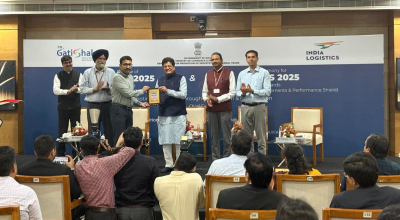
The Department for Promotion of Industry and Internal Trade under the Union Ministry of Commerce and Industry released the 7th edition of the Logistics Ease Across Different States 2025 report on May 13, 2026. This annual national assessment serves as a benchmarking and reform tool to gauge logistics performance across Indian states and Union Territories. In the latest edition, Uttar Pradesh advanced from its consecutive “Achiever” rank held during 2022–2024 to the highest tier of “Exemplar” status among landlocked states. The state shares this top tier with Tamil Nadu, Mizoram, and Delhi within their respective geographical categories.
Understanding the LEADS Framework
The Union Government conceived the LEADS initiative in 2018 on the lines of the World Bank’s Logistics Performance Index. The framework promotes both cooperative and competitive federalism by enabling states to identify infrastructure gaps, improve supply chain efficiencies, and streamline regulatory processes to lower nationwide delivery costs.
Key Assessment Pillars
The framework evaluates states and Union Territories using a mix of data inputs categorized under specific evaluation categories:
- Infrastructure: Quality of roads, rail networks, warehousing facilities, and cold storage chains.
- Services: Operational efficiency, availability of transport providers, and track-and-trace capabilities.
- Policy and Regulatory Environment: State-level logistics policies, single-window clearance mechanisms, and ease of obtaining approvals.
Methodology Enhancements in 2025
The 2025 edition features an updated methodology to ensure greater accuracy in tracking reforms:
- Data Apportionment: Objective indicators carry nearly 59% weightage to prioritize evidence-based outcomes, while perception indicators and stakeholder feedback account for the remaining share.
- Transitioned Grading Model: The framework moved away from the old three-tier structure (Achievers, Fast Movers, and Aspirers) to adopt a more comprehensive four-tier system.
Structural Categorization of States
To ensure fair benchmarking, the framework divides the sub-national units into four distinct geographical clusters: Coastal States, Landlocked States, North-Eastern States, and Union Territories. The table below outlines the full distribution of states across the updated four-tier performance framework for 2025:
| Category | Coastal States | Landlocked States | North-Eastern States | Union Territories |
| Exemplars | Tamil Nadu | Uttar Pradesh | Mizoram | Delhi |
| High Performers | Gujarat, Kerala, Maharashtra | Haryana, Telangana, Chhattisgarh, Bihar | Tripura, Meghalaya | Jammu and Kashmir, Puducherry |
| Accelerators | Andhra Pradesh, Odisha, Goa, Karnataka | Punjab, Jharkhand, Madhya Pradesh, Uttarakhand, Himachal Pradesh | Nagaland, Arunachal Pradesh, Manipur, Assam | Dadra and Nagar Haveli and Daman and Diu, Chandigarh, Ladakh, Lakshadweep |
| Growth-Seekers | West Bengal | Rajasthan | Sikkim | Andaman and Nicobar Islands |
Factors Driving Uttar Pradesh to Exemplar Status
The progression of Uttar Pradesh to the top tier highlights targeted regulatory and infrastructural interventions designed to transition the state toward a one-trillion-dollar economy. Because landlocked states lack direct maritime access, they depend heavily on road, rail, air cargo, and inland waterways.
Institutional Framework
The implementation of the Uttar Pradesh Warehousing and Logistics Policy 2022 established a structured framework to incentivize private investments. The state relies on Public-Private Partnership models to develop state-of-the-art warehouses, multi-modal parks, and rural godowns.
Integrated Connectivity
The state government created dedicated city logistics master plans linked directly with the PM GatiShakti National Master Plan. Freight movement is optimized by building critical storage hubs near major expressways, upcoming international airports, and the Dedicated Freight Corridors intersecting the state.
National Initiatives to Improve Indian Logistics
India’s domestic logistics sector deals with structural challenges, including an over-reliance on road transport which handles over 60% of total cargo, leading to high fuel consumption and transit delays. Multiple central schemes operate alongside state frameworks to reduce total logistics costs, which hover around 8% of the national Gross Domestic Product.
PM GatiShakti National Master Plan
This digital platform breaks inter-ministerial silos by integrating 16 ministries, including Railways and Roadways, for synchronized infrastructure project planning. It helps states map geographic layers for transport networks to avoid overlapping construction work.
National Logistics Policy 2022
This policy sets the strategic roadmap to place Indian logistics on par with developed economies by promoting digitalization, standardizing skill sets, and driving multi-modal transport adoption.
Digital Interventions
- Unified Logistics Interface Platform: An open API-based portal that integrates multiple individual tracking systems from departments like customs, ports, and railways into a single platform.
- Logistics Data Bank 2.0: Syncs directly with digital APIs to offer real-time container visibility to MSMEs and exporters across roads, rail lines, and sea routes.
IASPOINT Booster Facts for UPSC
- First Edition: The LEADS report was first published in 2018; the 2026 release marks its 7th edition.
- Nodal Ministry: It is developed entirely by the Department for Promotion of Industry and Internal Trade under the Ministry of Commerce and Industry.
- International Benchmark: The index mimics the World Bank’s biennial International Logistics Performance Index, where India ranked 38th out of 139 nations in the 2023 report.
- Dedicated Freight Corridors: Uttar Pradesh serves as the crucial junction point where the Eastern Dedicated Freight Corridor (Ludhiana to Dankuni) and the Western Dedicated Freight Corridor (Dadri to JNPT) connect.
- PM GatiShakti Portal Adoption: In urban centers like Delhi, over 38 out of 46 mandatory infrastructure layers have been successfully integrated into the national portal to manage freight movement efficiently.