
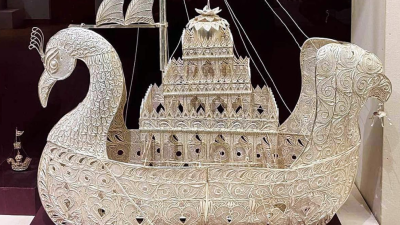
The traditional silver filigree craft of Cuttack, Odisha, known as Rupa Tarakasi, is facing severe economic distress due to a sharp surge in global silver prices and strict domestic import controls. The precious metal’s price tripled since early 2023, reaching ₹3 lakh per kilogram by May 2026. This price increase is driven by global supply deficits and rising industrial consumption in solar energy, electric vehicles, and semiconductors. Compounding this challenge, the Union Finance Ministry raised the effective customs duty on silver imports from 6% to 15% to conserve foreign exchange reserves amid macroeconomic stress from the West Asia conflict. These factors have reduced retail and corporate orders, threatening the livelihoods of the remaining 500 active artisans down from 3,000 in 1996.
Historical Evolution and Cultural Value
Rupa Tarakasi is a centuries-old art form that reflects a blend of diverse cultural influences and historical patronage.
Origins and Trade Links
- Ancient Maritime Trade: Historical evidence indicates that filigree craftsmanship was introduced to the coastal region of Odisha from Persia via Indonesia over 500 years ago through active Indian Ocean maritime trade routes.
- Medieval Presence: Record tracking shows the technique existed in the historic city of Cuttack as early as the 12th century.
- Mughal Patronage: The craft underwent major stylistic refinement under the Mughals, adapting to the luxurious and delicate design requirements of the imperial courts.
Socio-Cultural Function
- Festive Tableaux: The craft is central to local religious celebrations, particularly during Durga Puja in Cuttack, where massive silver filigree backdrops, known as Chandi Medhas, are handcrafted for pandals.
- Ritualistic Ornaments: It is traditionally used to create fine jewelry, decorative perfume containers (Attardani), utility items for weddings, and replicas of religious symbols like the Konark Sun Temple wheel.
Technical Process of Crafting Tarakasi
The execution of Rupa Tarakasi demands high levels of patience, precise manual skill, and specialized tools.
Wire Drawing and Carving
- Melting and Purifying: Raw silver bricks are melted in small clay crucibles over coal-fired furnaces to remove impurities and achieve high-purity silver.
- Beating into Plates: The molten silver is cast into small bars and passed through manual wire-drawing machines to create long, thin rods.
- Forming Fine Threads: Artisans continuously pull the metal through iron plates with progressively smaller holes until it transforms into hair-thin, flexible silver wires (Tara).
Framework Assembly and Soldering
- Outer Frame (Katas): Heavy silver wires are bent into the desired primary shape of the object to create a strong external boundary.
- Internal Filling (Carkas): The thin wires are twisted, crimped, and curled into intricate floral, geometric, or animal patterns, then carefully filled into the outer frame using tweezers.
- Soldering: The assembled piece is sprinkled with borax powder and a ground silver alloy soldering mixture, then heated with a hand blowpipe to fuse the delicate components without melting the main structure.
Recent Economic and Regulatory Challenges
The heritage craft sector is currently managing intersecting pressures from global market forces and domestic monetary interventions.
Skyrocketing Raw Material Cost
- Industrial Competition: High industrial demand from emerging technologies, including green energy components and advanced electronics, has strained global silver supplies, leading to a 200% price hike.
- Production Drop: Local workshops in Cuttack that previously processed 15 to 20 kg of silver monthly have scaled down operations to just 1 to 2 kg due to a decline in commercial viability.
Government Import Restrictions
- Customs Duty Hike: The tariff structure on silver imports was raised to 15%, consisting of a 10% Basic Customs Duty (BCD) and a 5% Agriculture Infrastructure and Development Cess (AIDC), to stabilize the current account deficit.
- Restricted Category Controls: Silver imports for domestic consumption were placed under the restricted category of the Foreign Trade Policy. This policy mandates prior government approval and channels imports through designated agencies, creating sourcing delays for micro-artisans.
Comparative Dimensions of Silver Crafting Traditions
The following table outlines how the structural and stylistic profile of Cuttack’s Rupa Tarakasi compares with other well-known silver traditions in India.
| Silver Craft / Art Form | Primary Geographical Hub | Distinctive Material Style & Technique | Key Traditional Products |
| Rupa Tarakasi | Cuttack, Odisha | Hair-thin silver wire loops, zero solid sheet backing, delicate openwork framework. | Chandi Medhas, Konark wheels, filigree jewelry. |
| Karimnagar Filigree | Karimnagar, Telangana | Twisted silver wire patterns with a focus on geometric networks and heavy sheet borders. | Trays, hookahs, jewelry boxes, spoons. |
| Bidriware | Bidar, Karnataka | Inlaying pure silver wires into a darkened alloy base of zinc and copper treated with soil. | Hookah bases, vases, ornamental bowls. |
| Silver Engraving | Salem, Tamil Nadu | Solid heavy silver sheets beaten and engraved with relief designs of deities and flora. | Anklets, temple lamps, ritual vessels. |
IASPOINT Booster Facts for UPSC
- Geographical Indication (GI) Tag: Cuttack Rupa Tarakasi was officially awarded the GI tag in March 2024. The application was filed by the Odisha State Co-operative Handicrafts Corporation Limited (Utkalika) and supported by the state’s Department of Textile and Handicrafts.
- Etymology of Tarakasi: The word is derived from two Odia terms—’Tara’, meaning wire, and ‘Kasi’, meaning to design or engrave.
- Agriculture Infrastructure and Development Cess (AIDC): A special purpose tax levied by the Central Government on a select list of imported and excisable commodities to raise dedicated funds for building rural agricultural infrastructure.
- Current Account Deficit (CAD): An economic metric that measures the shortfall between a nation’s total value of exported goods and services against its total value of imported goods and services. Large non-essential imports of precious metals expand the CAD.
- The Silver City: Due to its millennial association with the Rupa Tarakasi craft and its concentrated network of filigree workshops, the historic city of Cuttack is popularly designated as the “Silver City” of India.