
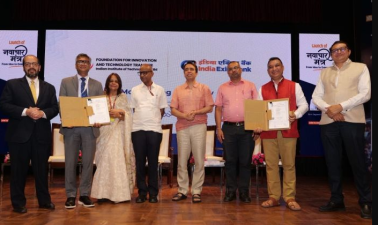
The Ministry of Skill Development and Entrepreneurship (MSDE) launched ‘Navachar Mantra’ at IIT Delhi on June 3, 2026. This national initiative strengthens grassroots entrepreneurship and expands institutional support channels for early-stage innovators. The primary target includes individuals from Tier-2 cities, Tier-3 towns, and rural landscapes across India. The programme creates formal pipelines to commercialise local creations, matching independent experimentation with structural enterprise support. It acts as an integration platform connecting remote community inventors with critical modern infrastructure, legal protection mechanisms, and policy networks to transition raw ideas into sustainable, formal market operations.
Operational Framework and Key Institutional Partners
The structural deployment of the project relies on specific nodal organizations under a hub-and-spoke configuration to facilitate technical and business execution.
- Implementing Agency: The National Institute for Entrepreneurship and Small Business Development (NIESBUD) handles operational execution, capacity building, and administrative supervision.
- Technical Knowledge Partner: The Foundation for Innovation and Technology Transfer (FITT) at IIT Delhi provides engineering expertise, regulatory guidelines, and modern laboratory testing frameworks.
- Application Protocol: Open registrations continue through a centralized digital platform until July 5, 2026. Eligible citizens must belong to the 18 to 55 age bracket.
- Evaluation Structure: A multi-stage screening panel composed of academic researchers, industrial specialists, and capital investors screens applicant portfolios based on local utility and scalability.
Priority Sectors Targeted for Strategic Intervention
The platform filters initial intakes into six distinct domains aimed at filling gaps in rural and small-scale industries.
Agritech and Allied Sectors
Interventions look to improve agricultural yields, reduce post-harvest resource losses, and optimize resource deployment via affordable local tools.
HealthTech and Wellness
Efforts prioritize developing point-of-care medical screening tools and decentralized health delivery equipment suited for remote primary health centers.
EdTech and Vocational Skilling
Focus areas emphasize affordable instructional design tools, regional language platforms, and physical simulators to boost rural employment indices.
Climate Action and Sustainability
Solutions focus on minor renewable power distribution modules, localized water conservation systems, and community-led circular economy experiments.
Rural Commerce and Retail Logistics
Solutions balance asymmetric transport nodes, lower storage overheads, and streamline primary sector access to urban terminal markets.
MSME Enablement
Innovations automate manufacturing steps, optimize hardware components, and introduce digital accounting tools into smaller clusters.
Core Lifecycle Benefits for Selected Enterprises
| Benefit Type | Specific Deliverable | Target Outcome |
| Incubation Cycle | Year-long structural incubation track | Prototype transformation and iterative field testing |
| Technical Auditing | FITT IIT Delhi laboratory access | Validation of mechanical, electrical, and structural parameters |
| Legal Protection | Intellectual Property Rights (IPR) support | Assisted patent searches, documentation, and filing procedures |
| Market Linkages | B2B networking setups and pilot projects | Real-world testing with industrial partners and municipal blocks |
| Capital Navigation | Curated investor roundtables | Growth financing and early corporate venture validation |
Strategic Policy Significance
The scheme coordinates with national economic objectives by transforming standard human capital indices.
Decentralizing the Start-up Map
Most historical venture capital concentration centers within a few metropolitan locations like Bengaluru, Mumbai, and Delhi. The project redistributes early-stage incubation infrastructure to address regional economic imbalances.
Formalizing Informal Knowledge System Ecosystems
Grassroots technologies usually develop in isolation without standard documentation or safety certifications. The institutional linkage provides engineering corrections, standardizes quality, and protects indigenous knowledge forms from predatory extraction.
Curriculum Integration and Vocational Alignment
Data collected from local innovations aids NIESBUD and the Directorate General of Training (DGT). The empirical facts help adjust vocational courses to match changing industrial demands in rural sectors.
IASPOINT Booster Facts for UPSC
- NIESBUD Status: Established in 1983, NIESBUD operates as an autonomous institute under the Ministry of Skill Development and Entrepreneurship. Its primary focus is standardizing entrepreneurship development procedures nationwide.
- FITT IIT Delhi: Formed in 1992, FITT acts as the industry interface of IIT Delhi, managing technology transfers, corporate partnerships, and incubator management.
- SDG Alignments: The programme works directly toward Sustainable Development Goal 8 (Decent Work and Economic Growth) and Sustainable Development Goal 9 (Industry, Innovation, and Infrastructure).
- Target Group Scope: The framework accommodates individual innovators, micro-enterprises, and startups present in validation, prototype development, or early revenue stages.
- Public Visibility Actions: Features include digital storytelling initiatives and ministerial podcasts to help participants secure public recognition without high marketing costs.