
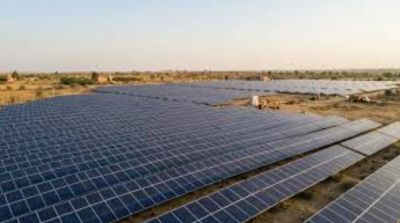
India’s climate-technology sector has seen rapid capital inflows. The Tracxn India Climate Tech 2026 Report records $12.8 billion invested across 1,583 companies, with annual funding rising from $315 million in 2020 to about $2.6 billion in 2025. The shift is now toward production-scale deployment.
Overview
The financing surge reflects a shift from experimentation to industrial-scale projects. Capital concentration has moved to late-stage deals; in the first five months of 2026 roughly 66% of $791 million went to five transactions. Investment now targets end-to-end value chains: generation, mobility, materials and circular economy systems.
Principal investment drivers and macroeconomic rationale
Energy security and import substitution
India imports about 85% of its crude oil. Green mobility, domestic battery chemistry and localised supply chains reduce external fuel dependency, lower balance-of-payments risk and shield the fiscal position from oil-price volatility.
Policy certainty and sovereign market-making
Long-horizon central schemes provide predictability that attracts international institutional capital. Sovereign incentives, demand-stimulation and Phased Manufacturing Programmes de-risk investments in domestic manufacturing and attract late-stage finance.
Shift to late-stage, scale-focused capital
Investors favour fewer, high-conviction transactions with clear deployment pathways. Large tickets enable rapid capacity expansion, economies of scale and faster unit-cost reduction across renewables, battery manufacturing and electric mobility fleets.
Sectoral capital distribution
| Technology sector | Cumulative investment | Operational focus |
| Renewable energy tech | $1.5 billion | Capital-intensive solar, wind and hybrid grid infrastructure |
| Solid waste management | $477 million | Waste-to-energy recovery, mechanised segregation, circular loops |
| Energy efficiency solutions | $352 million | Industrial smart grids, IoT HVAC, thermal optimisation |
| Air pollution management | $237 million | Carbon capture, industrial scrubbers, atmospheric sensors |
| Water & wastewater treatment | $208 million | Desalination frameworks, zero-liquid discharge systems |
Electric mobility: Fastest-scaling corporate segment. Capital flows into mass-transit bus fleets, commercial last-mile fleets and localisation of advanced battery manufacturing. Major transactions include Inox Clean Energy’s $344 million Series D and Erisha E Mobility’s $1 billion Series D.
Foundational regulatory catalyst frameworks
PM E-DRIVE programme
A ₹10,900 crore sovereign programme to accelerate electric vehicle adoption. It provides demand incentives for electric two-wheelers, three-wheelers, e-ambulances and e-trucks, and enforces Phased Manufacturing Programme rules to retain supply-chain investment domestically.
Carbon Credit Trading Scheme (CCTS)
Scheduled to become operational by late 2026. The CCTS converts the Perform, Achieve and Trade mechanism into a baseline-and-credit intensity cap system. It covers about 490 large industrial units across nine hard-to-abate sectors and uses financial year 2023–24 emissions data as the baseline.
Rare Earth Permanent Magnets Scheme
Backed by a ₹7,280 crore allocation, the scheme targets domestic extraction, refining and processing of critical elements to secure supply for EV motors and wind-turbine alternators.
Institutional frameworks and anchor partners
- Administrator: Bureau of Energy Efficiency (BEE) is the primary administrator for the Indian Carbon Market and reports to the National Steering Committee co-chaired by the Ministry of Power and the Ministry of Environment, Forest and Climate Change.
- International anchors: Development finance institutions—British International Investment, IFC, FMO, Finnfund—dominate late-stage rounds and provide blended capital and technical conditions acceptable to global investors.
- Corporate benchmarks: Large late-stage deals set valuation and scale precedents that mobilise secondary capital and manufacturing commitments.
Geographic concentration
Noida has emerged as the most-funded urban node for climate-tech operations, driven by proximity to manufacturing corridors. Other hubs retain specialised clusters but funding and industrial capacity show regional concentration risks.
Significance for national goals
- Energy security: Reduced oil import dependence and enhanced domestic battery and magnet supply chains strengthen external resilience.
- Industrial competitiveness: Late-stage capital enables large-scale manufacturing, cost reductions and export potential in clean-tech goods.
- Sustainable development: Diversified investments in waste, water, air and efficiency support pollution control targets and compliance under international commitments.
Challenges and way forward
| Challenge | Implication | Policy response |
| Early-stage funding gap | Weak innovation pipeline; concentration risk on late-stage firms | Expand blended finance, seed grants, tax credits and state-backed venture vehicles to nurture prototypes and pilots |
| Regional concentration | Uneven industrial development and skills mismatch | Incentivise state-level manufacturing hubs, diffused infrastructure grants and capacity building programmes |
| Carbon market MRV and integrity | Risk of low-quality credits and market distortion | Strengthen monitoring, reporting and verification systems; ensure independent audits and clear baseline adjustment rules |
| Critical minerals and environmental risk | Local environmental damage from extraction; supply-chain bottlenecks | Enforce strict environmental safeguards, circularity targets and recycling mandates for batteries and rare-earths |
| Grid and land constraints | Project delays and higher costs for large-scale deployment | Plan grid upgrades, streamlined land acquisition for green industry zones, and faster clearances |
Implementation priorities:
- Promote blended public–private finance to connect seed-stage firms to DFIs and corporates.
- Invest in skill development tied to battery manufacturing, recycling and CCM technologies.
- Strengthen procurement policies in public transport and government fleets to create firm demand.
- Coordinate central and state incentives to avoid subsidy arbitrage and support regional equity.
Model Questions
- Examine the primary drivers behind the surge in India’s climate-tech funding and analyse its implications for the country’s energy security and industrial competitiveness. [GS-III: Economic Development]
- Critically evaluate the PM E-DRIVE programme and the Carbon Credit Trading Scheme (CCTS) as instruments to catalyse growth in India’s climate-tech sector. [GS-II: Governance]
- Analyse how current capital allocation across renewables, waste, water, air and energy-efficiency aligns with India’s sustainable development objectives and international climate commitments. [GS-III: Environment & DM]
- Discuss the institutional mechanisms and international financial partnerships supporting India’s climate-tech expansion and identify key challenges to ensure inclusive and sustained development. [GS-III: Economic Development]
Answer should note import dependence on crude oil (~85%) and balance-of-payments risk; link green mobility, domestic battery chemistry and magnet schemes to import substitution; explain role of sovereign incentives and DFIs in de‑risking capital; assess how late-stage investment enables manufacturing scale, cost reduction, export potential and employment; discuss risks such as early-stage financing gaps and supply-chain bottlenecks.
Answer should describe PM E-DRIVE (₹10,900 crore, demand incentives, PMP rules) and CCTS (baseline-and-credit design, coverage of ~490 units, 2023–24 baseline); assess how demand incentives and localisation rules stimulate manufacturing; consider CCTS potential to monetize efficiency and spur tech adoption; identify governance requirements: clear rules, MRV, phased implementation and alignment with state policies.
Answer should cite sectoral investments (renewables $1.5bn; waste $477m; efficiency $352m; air $237m; water $208m); explain contribution to emissions reduction, pollution control and resource efficiency; evaluate gaps such as deployment scale, lifecycle impacts (battery recycling, rare-earth extraction) and the need for integrated policy (grid readiness, circular economy) to meet NDCs and compliance markets.
Answer should list BEE as Indian Carbon Market administrator and the National Steering Committee oversight; name DFIs (BII, IFC, FMO, Finnfund) as anchor investors; assess benefits of DFI capital and technical terms; identify challenges—early-stage finance, regional imbalance, MRV integrity, environmental safeguards for mining and recycling—and recommend blended finance, state coordination and strengthened monitoring to ensure inclusion.