
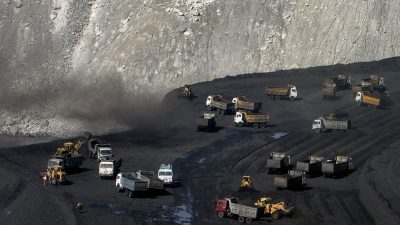
Chhattisgarh’s mineral administration has moved from paper-led discretion to data-led control. Khanij Online and Khanij Online 2.0 now connect production, despatch, payments, compliance, and grievance handling on a single digital system, making mineral governance faster, more transparent, and easier to audit.
Why mineral governance needed reform
Mineral administration has long suffered from information asymmetry, manual processing, delayed reporting, and leakages between extraction and royalty collection. These weaknesses raised compliance costs, slowed approvals, and weakened trust in the system. In a mineral-rich state such as Chhattisgarh, these were not small administrative defects. They affected state revenue, industrial logistics, monitoring of illegal movement, and the credibility of resource governance. Digital reform became necessary to reduce discretion and improve traceability across the mineral value chain.
Khanij Online: the first systemic shift
Launched in 2017, Khanij Online replaced fragmented file-based procedures with a single digital platform. Production reporting, despatch approvals, payments, and compliance tracking were brought onto one interface.
- Production and despatch data were made visible to regulators in near real time.
- Automated daily approvals reduced delay and arbitrary discretion.
- Single-click digital payments simplified compliance for lessees.
- Digital records created an audit trail for each transaction.
The reform changed the compliance logic. Instead of relying only on enforcement after violation, the system made regular compliance easier than evasion.
Operational impact and fiscal gains
The platform integrated hundreds of leaseholders and licensees, thousands of end users, and tens of thousands of transport vehicles. It enabled despatch of over 138 million tonnes of minerals and collection of more than ₹8,100 crore in royalties and statutory levies. The National e-Governance Award for 2019-20 gave institutional validation to the model. The award mattered because the gains were not only technical. They were fiscal, administrative, and behavioural.
How technology enforced discipline
Khanij Online reduced the scope for leakage by linking digital approvals with physical movement controls.
- Barcoded e-Transit Passes improved traceability of mineral transport.
- GPS-enabled vehicle tracking allowed movement monitoring.
- e-Check posts reduced manual interference at transport checkpoints.
- Digital payment systems improved revenue predictability for the State.
These features narrowed the space for misreporting and rent-seeking. For industry, predictability in approvals and dispatches reduced transaction costs. For the State, the same predictability improved enforcement and revenue flow.
From digitisation to institutional evolution: Khanij Online 2.0
Governance reform in mineral administration has required continuous updating. Khanij Online 2.0 was built as a second-generation system to strengthen continuity, resilience, and field-level use.
| Feature | Governance value |
|---|---|
| MeitY-empanelled cloud hosting through Platform-as-a-Service | Zero downtime, disaster recovery, and safer data storage |
| Android and iOS applications | Field use by officials and operators without dependence on central offices |
| Real-time analytics and auto-generated MIS reports | Continuous monitoring instead of delayed review |
| Grievance redressal and 24×7 helpdesk | Faster response and better user support |
The cloud-based design is important for a system that handles sensitive administrative and commercial data. It also improves resilience during disruptions and supports administrative continuity.
Economic implications for the State and industry
Digitised mineral governance affects both revenue collection and business efficiency.
- For the State: better royalty realisation, less leakage, and improved cash flow predictability.
- For industry: lower compliance costs, faster approvals, and reduced uncertainty in transport and despatch.
- For the economy: better movement of mineral inputs supports steel, power, cement, and allied sectors.
The model also improves the quality of public finance. When collections are traceable and timely, the State can plan expenditure with greater certainty. This matters in resource-rich states where mineral revenue supports infrastructure and welfare spending.
Evidence-based governance in natural resources
Khanij Online 2.0 has shifted decision-making from fragmented reports to verified data. This matters for three areas:
- Extraction control: production and despatch data can be matched more easily.
- Environmental oversight: monitoring can be linked with regulatory records.
- District Mineral Foundation spending: decisions can be better aligned with field requirements and accountability norms.
Such data systems reduce reliance on anecdote and manual aggregation. They create a stronger base for inspections, audits, and policy review.
Governance principles at work
| Principle | How the platform serves it |
|---|---|
| Transparency | Digital records, real-time monitoring, and visible despatch data |
| Accountability | Audit trails, automated approvals, and traceable payments |
| Efficiency | Single-window processing and reduced manual delays |
| Integrity | Lower discretion and fewer leakage points in transport and billing |
| Evidence-based policy | Management information and analytics for routine decisions |
Federal lessons and cooperative governance
The Chhattisgarh model shows how a State can align local administration with wider national priorities without adding new layers of bureaucracy. The same digital logic supports logistics efficiency, clean governance, and sustainable resource use. This is relevant to cooperative federalism because natural resource management is often a shared administrative field in practice. States that build strong digital systems can improve their own governance while contributing to national economic resilience.
Why this matters for Viksit Bharat
For Viksit Bharat, governance quality will matter as much as policy design. Mineral wealth can create public value only when extraction, transport, and revenue collection are governed transparently. Chhattisgarh’s experience shows that digital platforms can become governance infrastructure rather than software add-ons. When systems are designed well, they embed compliance in daily routine, improve trust across stakeholders, and help convert natural resources into durable public benefit.
Replicability and limits
The model can be adapted to other states and sectors, but replication is not automatic. The main constraints are uneven digital capacity, weak connectivity in remote areas, cyber risks, resistance from existing interests, and the need for regular system upgrades.
| Challenge | Policy response |
|---|---|
| Digital divide | Training for officials, lessees, and field staff |
| Infrastructure gaps | Reliable connectivity, power backup, and cloud-based design |
| Data security | Encryption, access control, and periodic security audits |
| Resistance to change | Stakeholder engagement and phased implementation |
| System interoperability | Common standards and integration with legacy databases |
| Sustained operation | Budget support, capacity building, and continuous upgrades |
Where these conditions are met, digitised mineral governance can reduce leakages, improve revenue, and create a more credible regulatory environment.
What to note for Prelims?
- Khanij Online and Khanij Online 2.0 as e-governance initiatives in mineral administration
- Use of GPS, e-Transit Passes, e-check posts, and cloud hosting in mining regulation
- Role of District Mineral Foundation in mineral-region development
- National e-Governance Award relevance to public digital systems
What to note for Mains?
- Digital governance as a tool to reduce leakages, discretion, and compliance costs in natural resource administration
- Mineral governance reform as part of evidence-based policymaking and administrative accountability
- State-level digital systems as instruments of cooperative federalism
- Replicability of the Chhattisgarh model in other sectors such as transport, excise, land records, and public procurement
Model Questions
- Chhattisgarh’s Khanij Online has been described as a structural reform in mineral administration. Discuss how it addressed historical inefficiencies and improved transparency and accountability in the sector. [GS-II: Governance]
- Examine the economic implications of digitising mineral governance in Chhattisgarh. How does this model support the broader goals of Viksit Bharat and sustainable resource management? [GS-III: Economic Development]
- How does the transition from Khanij Online to Khanij Online 2.0 reflect an institutional shift towards evidence-based governance and cooperative federalism? [GS-II: Governance]
- Despite the success of digital mineral governance, what challenges remain for its long-term sustainability and replicability across Indian States? Suggest suitable measures. [GS-II: Governance]
Khanij Online replaced file-based procedures with a unified digital platform covering production reporting, despatch approvals, payments, and compliance tracking. It reduced information asymmetry, manual delay, and leakage between extraction and royalty collection. Features such as real-time monitoring, e-payments, barcoded e-Transit Passes, GPS tracking, and e-check posts improved traceability and reduced discretion, while also raising revenue collection and administrative credibility.
Digitised governance improved royalty collection, reduced compliance costs, and created predictability for both the State and industry. Better monitoring of mineral movement supports steel, power, and cement value chains. By linking extraction, transport, and payments to verified data, the model strengthens fiscal discipline, efficient resource use, and evidence-based policy. It also aligns with Viksit Bharat by improving governance quality and public value from natural resources.
Khanij Online 2.0 adds cloud hosting, disaster recovery, mobile access, real-time analytics, MIS reports, and grievance redressal. These features improve data reliability, field coordination, and service delivery. Policy choices on extraction, environment, and DMF spending can now draw on verified data rather than fragmented reports. The model shows how States can improve governance quality while supporting national priorities without expanding bureaucracy.
Key challenges include digital literacy gaps, uneven connectivity, cyber security risks, resistance from vested interests, and the need for continuous upgrading. Replication requires standardised frameworks, phased rollout, stakeholder training, secure cloud architecture, and adequate funding. States must also ensure interoperability with legacy systems and maintain helpdesks and grievance systems so that digital reform remains usable for both officials and operators.