
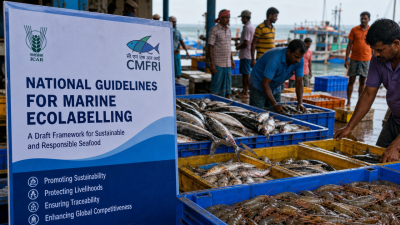
On 16 June 2026 ICAR‑Central Marine Fisheries Research Institute (CMFRI), Kochi, released a draft discussion paper titled National Guidelines for Marine Ecolabelling. The draft proposes a national framework to regulate seafood sustainability certification programmes.
Core objectives
- Date & sponsor: Draft released 16 June 2026 by ICAR‑CMFRI (Kochi).
- Primary aim: Establish a national mechanism to govern marine ecolabel certification.
- Coverage: Seafood value chain including capture, processing, traceability and market access.
Key features of the draft
- Fisher participation: Equitable inclusion of traditional and artisanal fishers in certification processes.
- Community protection: Measures to prevent market‑driven certification from creating entry barriers for small fishers.
- Legal alignment: Certification to align with India’s fisheries laws and national sustainability priorities.
- Sovereignty claim: Reaffirms India’s sovereign rights over marine fisheries within its EEZ.
- Traceability: Emphasis on end‑to‑end traceability across the seafood value chain.
- Indigenous label: Explores creation of an Indian marine eco‑label.
Legal & institutional linkages
- ICAR‑CMFRI: Research institute under Indian Council of Agricultural Research drafting the framework.
- Regulatory actors: Ministry of Fisheries and MPEDA likely to be primary regulators for export and certification matters.
- Current gap: India presently lacks a unified national mechanism for marine ecolabelling despite interest from international agencies.
IASPOINT Booster Facts
- EEZ: Exclusive Economic Zone extends up to 200 nautical miles under UNCLOS; sovereign rights include living marine resources.
- MPEDA: Marine Products Export Development Authority regulates quality and export certification of seafood.