
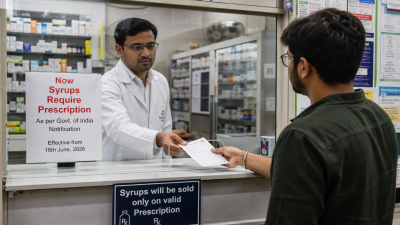
The Union Ministry of Health and Family Welfare has mandated prescriptions for all medicinal syrups, including cough syrups, ending their OTC sale nationwide under the Drugs (Fifth Amendment) Rules, 2026. The change follows concerns about contaminated syrups linked to child deaths and aims to curb misuse and improve drug safety.
What is the current change and why it matters
Current change: Syrups were removed from Schedule K of the Drugs Rules, 1945 and now require a valid prescription at the point of sale. The amendment was notified in the Gazette and framed after consultation with the Drugs Technical Advisory Board. Why it matters: The change alters access to a widely used medication form. It addresses public health risks from contamination, overdose and recreational misuse, while creating regulatory, access and enforcement implications for health governance and the pharmaceutical market.
Key provisions of the Drugs (Fifth Amendment) Rules, 2026
- Mandatory prescription: All medicinal syrups require a registered medical practitioner’s prescription for sale.
- Legislative basis: Amendment to the Drugs Rules, 1945 removing “Syrups” from Schedule K; rules notified in the Gazette after DTAB consultation.
- Scope: Applies to all medicinal syrups, including cough syrups; lozenges, pills and tablets remain OTC.
- Rulemaking process: Draft rules were placed for public comment and responses were considered before finalisation.
Implications for public health
Positive impacts: Reduced risk of self-medication, lower probability of recreational abuse and overdose, better clinical oversight of paediatric dosing, and improved traceability of dispensing. Prescription requirement can limit exposure to contaminated or substandard products. Risks and trade-offs: Prescription constraint may impair timely access for remote, low-income or marginalised patients. It may increase demand on primary care services and raise out-of-pocket costs for consultations unless mitigated.
Impact on pharmaceutical trade and consumers
- Consumers: Pharmacies will demand prescriptions; consumers must obtain medical consultation before purchase. Behavioural change will be required.
- Retail pharmacies: Compliance burden increases; record-keeping and verification processes will be necessary. Risk of enforcement action for non-compliance.
- Manufacturers: OTC syrup volumes may fall; market reorientation toward prescription channels and labelling/quality controls likely.
- Economic effect: Short-term disruption to sales and supply chains; potential long-term shift to regulated distribution and liability management.
Social and ethical dimensions
Social: Addresses entrenched self-medication practices and the recreational abuse of cough syrups among adolescents and young adults. Interaction with educational and addiction-prevention systems is required. Ethical: Balances individual access to common medicines with state obligation to prevent harm. Measures must avoid disproportionate barriers for vulnerable populations. Medical practitioners’ duty includes appropriate prescribing and avoiding unnecessary barriers to care.
Enforcement challenges and practical measures
- Challenges: Long-standing consumer habit of OTC purchase, variable pharmacy compliance, rural access gaps, risk of black-market circulation, potential for forged or illicit prescriptions.
- Administrative constraints: Limited drug inspector capacity and uneven regulatory enforcement across states.
Recommended measures
| Area | Measures |
|---|---|
| Regulatory enforcement | Strengthen drug inspector cadre, standardise inspections, clear penalties for violations, state-central coordination for uniform enforcement. |
| Digital systems | Expand e-prescription platforms, integrate with pharmacy networks, require digital logs for sales to aid audits and traceability. |
| Healthcare access | Augment primary care capacity, permit remote consultations by registered practitioners, subsidise consultations for vulnerable groups. |
| Awareness and training | Public education on risks of self-medication; pharmacist training on legal obligations and verification procedures. |
| Supply chain controls | Stricter quality inspection of manufacturers, routine lot testing, and recall protocols for suspect batches. |
India’s regulatory framework and precedents
Legal framework: Primary law: Drugs and Cosmetics Act, 1940; subordinate rules: Drugs Rules, 1945. DTAB advises technical amendments; central government enacts rules. Precedents: Reclassifications and schedule changes have been used previously to control antibiotic and narcotic access. The current amendment reflects use of schedule revision to restrict an entire dosage form that was earlier exempt. International context: Other countries regulate certain cough preparations tightly or classify them as prescription-only when ingredients pose abuse or poisoning risks. India’s move aligns regulatory response with public health incident management and international concerns regarding product safety.
Implementation checklist for policymakers
- Immediate: Issue operational guidance to state drug controllers and pharmacies; circulate DTAB technical notes; public advisory on need for prescriptions.
- Short-term (3–6 months): Deploy e-prescription pilots, expand inspector training, launch awareness drives focused on parents and youth.
- Medium-term (6–18 months): Strengthen primary healthcare access, integrate prescription verification with Aadhaar-authenticated practitioner IDs, institute routine manufacturer audits.
- Evaluation: Monitor dispensing patterns, adverse events, and access equity; adjust policy to reduce unintended barriers.
Model Questions
- Examine the rationale behind the government mandate requiring prescriptions for medicinal syrups and analyse its likely impact on public health and the pharmaceutical industry. [GS-II: Governance]
- Analyse the social and ethical dimensions of over-the-counter drug misuse in India, with reference to adolescents and young adults. [GS-II: Social Justice]
- Discuss the main enforcement challenges in implementing the Drugs (Fifth Amendment) Rules, 2026, and suggest measures to ensure compliance and prevent circumvention. [GS-II: Governance]
- Critically evaluate how the recent amendment reflects the evolution of India’s drug regulatory framework. [GS-II: Constitution of India & Polity]
The mandate responds to contamination-linked deaths and to misuse and recreational abuse. Public health impact: better clinical oversight, reduced overdose and traceability, but risks reduced access for remote and low-income patients and increased burden on primary care. Industry impact: short-term demand disruption, compliance costs, shift to prescription channels, and incentives for quality controls and supply-chain audits.
Socially, OTC access fuels self-medication and recreational use among youth, linked to addiction and harm. Ethically, the state must protect public health while ensuring equitable access; paternalistic restrictions must not unduly burden vulnerable groups. Policy should combine regulation with education, addiction services, and measures to preserve access for marginalised populations.
Challenges: ingrained OTC buying habits, uneven pharmacy compliance, limited inspector capacity, forged prescriptions, and black markets. Measures: strengthen inspectorate, digital e-prescription systems, mandatory pharmacy record-keeping, public awareness, enhanced penalties, and improved primary care access to reduce incentive for circumvention.
The amendment uses schedule revision under the Drugs Rules to regulate dosage forms and limits exemptions previously in Schedule K. It demonstrates responsive rulemaking following public-health incidents and greater reliance on advisory bodies like DTAB. The change shows regulatory shift from reactive recalls to pre-emptive access control, while highlighting governance challenges in uniform enforcement across federal structures.