
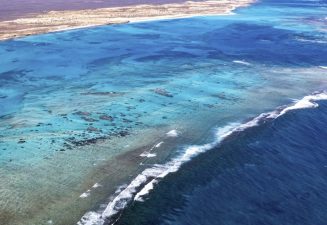
INCOIS issued marine heatwave alerts recently; nearly 36% of the Arabian Sea is under heat stress and forecast models show higher El Niño risk. Marine heatwaves are shifting sardine and mackerel distributions, threatening coastal livelihoods and exposing gaps in fisheries governance and climate adaptation.
What is the current problem?
Marine heatwaves (MHWs) in the Indian Ocean have increased sharply. Frequency and intensity have risen over recent decades; projections indicate the ocean may approach a near‑permanent MHW state by mid‑century. The immediate effect is redistribution of temperature‑sensitive stocks and episodic production losses for fishers.
Why this matters for governance, economy, society and security
- Governance: Existing laws and regulatory systems were not written for rapid ocean change and lack climate‑responsive tools.
- Economy: Marine fisheries remain a major livelihood and food sector; total marine production was 35.7 lakh tonnes in 2025 and millions depend on coastal fisheries.
- Society & food security: Temperature‑sensitive small pelagics provide affordable protein; their decline or redistribution undermines nutrition and incomes for small‑scale fishers.
- Security: Sudden shifts in fishing grounds can raise conflicts over access, increase migration pressure on coastal communities, and stress local governance.
MHW phenomenon: causes, trends and near‑term outlook
- Definition: Prolonged anomalous sea surface temperature rise relative to a climatological baseline.
- Observed trends: MHW frequency in the tropical Indian Ocean has risen markedly since 1982; regional increases vary, with additional events per decade in western Indian Ocean and north Bay of Bengal.
- Current signals: National alerts show multi‑basin heat stress; recent studies report MHWs rose most sharply among climate indicators over the last five years.
- Projection: Scientific models indicate a move toward near‑permanent MHW conditions by the 2050s; El Niño risk in late 2026 raises short‑term stress on ecosystems.
Environmental impacts
- Species redistribution: Sardine and mackerel move to deeper or more northerly waters, reducing availability to artisanal fleets.
- Ecosystem function: Altered currents and temperatures change productivity, breeding cycles and predator–prey links.
- Biodiversity risk: Repeated or prolonged heat events increase local mortality, coral stress and habitat loss for temperature‑sensitive taxa.
Socio‑economic effects on Indian fisheries
- Scale: Fisheries employ over 30 million people; small pelagics are central to coastal livelihoods and local markets.
- Production impact: Declines and redistribution of key stocks have already reduced catches in several states and raised operational costs as fishers travel farther.
- Food and nutrition: Reduced local supply of cheap, protein‑rich fish affects dietary diversity and household nutrition in coastal regions.
- Equity: Artisanal and small‑scale fishers bear most of the burden while contributing least to global emissions; access and adaptation differ across states.
Gaps in India’s fisheries governance
- Legal gaps: The Marine Fisheries (Regulation and Management) Act lacks explicit climate‑adaptive provisions such as temperature‑linked stock advisories, dynamic fishing zones and climate vulnerability classifications for species.
- Fragmented regulation: Coastal states have different rules and enforcement capacity; this fragmentation impedes coordinated, timely responses.
- Data–policy disconnect: Oceanographic forecasts and biological surveys are not yet integrated into operational decision‑making at the scale required.
- Social safeguards: Current schemes do not systematically protect small‑scale fishers from MHW shocks or offer rapid livelihood support linked to ecological forecasts.
Policy and management measures required
- Legal reform: Amend the Marine Fisheries Act or issue rules to incorporate climate‑adaptive instruments (temperature‑linked advisories, species vulnerability lists, time‑and‑temperature based fishing zones).
- Forecast‑to‑fishery systems: Operationalise INCOIS, IITM and CMFRI data into real‑time advisories for stock status and spatial closures.
- National Plans of Action: Accelerate NPoA for small‑scale inland and marine fisheries with FAO and BOBP‑IGO support, including finance and capacity components.
- Social protection: Link forecasted low‑catch periods to targeted cash support, gear subsidies and retraining for alternative livelihoods.
- Fisher participation: Include fishers and local institutions in co‑management, reporting and adaptation planning.
Institutional roles and coordination
- INCOIS: Provide MHW alerts, oceanographic forecasts and early warning products for advisory services.
- CMFRI: Monitor stock shifts, advise on species vulnerability and adjust landing‑level guidance.
- IITM and other research bodies: Model climate trajectories and El Niño impacts to improve seasonal to decadal forecasts.
- EDIF and state agencies: Translate scientific inputs into policy briefs, training and local implementation.
- Inter‑state coordination: A central mechanism is needed to harmonise rules, share data and manage cross‑boundary stock movements.
International cooperation and climate justice
- Regional fora: BOBP‑IGO calls for FAO support to address uneven climate burdens among Bay of Bengal states.
- Technical assistance: FAO can support NPoAs, capacity building, and standard‑setting for climate‑adaptive fisheries management.
- Finance and equity: Access to climate finance must factor the disproportionate impact on low‑emission coastal communities and small‑scale fisheries.
Implementation constraints and capacity needs
- Monitoring gaps: Spatially consistent biological surveys and fleet tracking need scaling.
- Human capacity: Training in forecast interpretation, co‑management and rapid response is required at state and local levels.
- Institutional incentives: Aligning state and central priorities requires funding streams tied to climate‑adaptive outcomes.
- Market and value‑chain adaptation: Investment in cold chains and alternative markets can reduce vulnerability when local catches fall.
Priority short‑term actions
| Gap | Action | Lead agencies |
|---|---|---|
| Absence of temperature‑linked advisories | Develop operational advisories using INCOIS/CMFRI data; issue seasonal warnings | INCOIS, CMFRI, State Fisheries Departments |
| Fragmented rules | Establish inter‑state coordination cell and unified contingency protocols | DoF, State Governments, BOBP‑IGO |
| Social protection gap | Link forecasted low‑catch events to targeted cash transfers and insurance | Ministry of Fisheries, State Social Welfare Departments |
| Limited finance for adaptation | Mobilise national and international climate funds for NPoAs and infrastructure | MoFPI, Ministry of Environment, FAO partners |
Model Questions
- Analyse the increasing frequency and intensity of marine heatwaves in the Indian Ocean and their environmental implications for India’s blue economy and marine biodiversity. [GS-III: Environment & DM]
- Critically examine India’s existing fisheries governance in the context of escalating marine heatwaves. What socio‑economic repercussions follow for coastal communities? [GS-II: Governance]
- With projections of a near‑permanent marine heatwave state by mid‑century, what policy reforms and climate‑adaptive measures should India prioritise? Discuss the role of national and international cooperation. [GS-II: Governance]
- Discuss how an integrated, multi‑stakeholder approach can secure food security and climate resilience for India’s blue food systems facing marine heatwaves. [GS-III: Environment & DM]
Define MHWs and summarise observed trends and projections. Explain ecological effects: species redistribution, breeding and food‑web disruption, coral and habitat stress. Assess impacts on the blue economy: reduced small pelagic catches, altered fisheries yield and costs. Conclude with implications for food security and the need for monitoring, forecasting and climate‑adaptive management.
Outline governance gaps: legal absence of temperature‑linked advisories, lack of dynamic fishing zone rules and fragmented state regulations. Describe socio‑economic effects: loss of artisanal access to stocks, income and nutritional deficits, and rising operational costs. Assess institutional capacity shortfalls and propose reforms: legal amendments, forecast integration, social protection and inter‑state coordination.
Recommend legislative updates to include temperature‑linked advisories, species vulnerability lists and time‑and‑temperature fishing zones. Prioritise operational forecast‑to‑fishery systems, NPoAs for small‑scale fisheries, and social safety nets. Outline international support: FAO technical assistance, BOBP‑IGO regional coordination and climate finance for equity and capacity building.
Describe a science–policy interface linking INCOIS, CMFRI and IITM forecasts with fisheries departments and communities. Emphasise co‑management with fishers, inter‑sectoral coordination, market and cold‑chain investments, and targeted finance. Argue that combined monitoring, social protection and adaptive management preserves livelihoods and sustains coastal food supplies.