
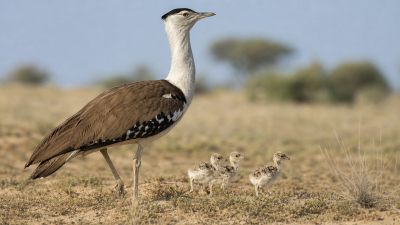
As of 15 June 2026 three Great Indian Bustard chicks hatched in Rajasthan under Project Great Indian Bustard; one chick hatched from a wild‑collected egg and two from eggs laid in captivity.
Recent Breeding Outcomes
- New hatchlings (15 Jun 2026): three chicks inducted into the conservation breeding programme in Rajasthan.
- Conservation stock: 94 Great Indian Bustards in conservation breeding centres as of 15 Jun 2026.
- Season tally (to 15 Jun 2026): 26 chicks hatched this season — 18 via artificial insemination, 4 via natural breeding, 4 from wild‑collected eggs.
Interventions and Techniques
- Project Great Indian Bustard: centralised captive‑breeding and recovery initiative driving egg collection, artificial insemination and captive rearing.
- Artificial insemination: primary reproductive technique producing 18 of the season’s 26 chicks.
- Jumpstart Intervention: three chicks raised in the wild as replacements for eggs collected from nests to maintain genetic input and reduce predation losses.
Spatial Trends and Concerns
- Regional variance: breeding success concentrated in Rajasthan; population declines reported in Karera and Ghatigaon (Madhya Pradesh).
- Role of centres: captive populations serve as source for planned reintroductions and genetic management.
IASPOINT Booster Facts
- Scientific name: Ardeotis nigriceps.
- IUCN status: Critically Endangered.
- Legal status: Listed under Schedule I of the Wildlife Protection Act, 1972.
- Principal threats: collision with overhead power lines and habitat loss.