
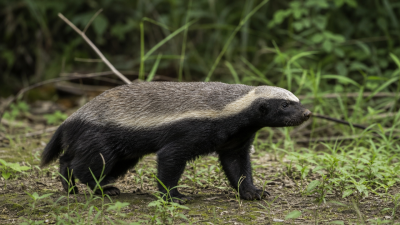
On 12 June 2026, the Kaziranga National Park and Tiger Reserve released the first scientific assessment of the greater hog badger, utilizing camera-trap data from the All India Tiger Estimation. The study, a collaboration between the Kaziranga Tiger Cell, Wildlife Conservation Trust, and The Fishing Cat Project, estimated a population of at least 55 individuals across 1,100 sq. km.
Species Profile and Ecology
- Scientific Name: Arctonyx collaris (Family: Mustelidae).
- Characteristics: A nocturnal, burrowing omnivore that forages on invertebrates, small vertebrates, and plant matter.
- Conservation Status: Vulnerable (IUCN Red List); Schedule I (Wildlife Protection Act, 1972).
- Range: Found in Northeast India, Bangladesh, Myanmar, Thailand, Lao PDR, Vietnam, and Cambodia.
- Habitat: Grasslands, wetlands, and forest edges that facilitate burrowing and rooting.
- Ecological Role: Acts as an “ecosystem engineer” by causing soil disturbance, nutrient redistribution, and leaf-litter turnover, which aids soil aeration and seed germination.
IASPOINT Booster Facts
- Legal Protection: Schedule I species receive the highest level of legal protection under the Wildlife Protection Act, 1972 (Sections 51–66 detail penalties for violations).
- Methodology: The report highlights the growing utility of “camera-trap bycatch”—data collected from standardized tiger grids—to estimate density and occupancy for other non-target species.
- Threats: Population declines in Southeast Asia are primarily driven by habitat loss and hunting.