
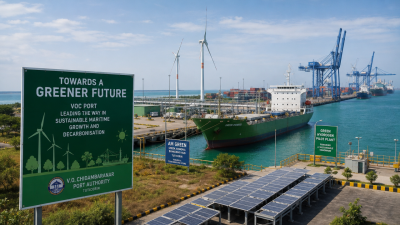
On 23 June 2026 V.O. Chidambaranar Port Authority reported a 45% reduction in net carbon emissions and said renewable energy offsets nearly 94% of its energy consumption.
Key outcomes (June 2026)
- Net emissions: 45% reduction in net carbon emissions declared on 23 June 2026.
- Renewable offset: Renewable energy offsets ~94% of the port’s total energy use.
- Carbon intensity: Nearly 50% reduction in carbon emissions per tonne of cargo over four years.
Green fuels and infrastructure
- Green ammonia hub MoU: Agreement with AM Green for Tuticorin green ammonia production and bunkering; envisaged investment > Rs 22,000 crore.
- Ammonia capacity: Planned 200,000 TPA by 2029–30; potential upgrade to 500,000 TPA by 2035.
- Green hydrogen: Pilot plant commissioned producing 10 Nm3/hour; investments in green hydrogen and green methanol infrastructure.
Operational and technology measures
- Renewable power: Captive 9 MW wind project under installation; grid synchronisation expected by late 2026.
- Electrification & renewables: Deployment of electrification, wind and other renewables to cut Scope‑1 and Scope‑2 emissions.
- Digitalisation: Introduction of PortGPT, an enterprise‑grade generative AI mobile application for port operations.
Certifications & partnerships
- Scope‑2 Emission Free Port: Certification recognising clean‑energy, low‑carbon operations.
- Academic centre: MoU with Gati Shakti Vishwavidyalaya to establish a Centre of Excellence in maritime logistics and port management.
- Documented case study: IIM Calcutta case study on renewable, electrification and green hydrogen initiatives.
IASPOINT Booster Facts
- Carbon intensity metric: Emissions per tonne of cargo used to measure port decarbonisation progress.
- Scope‑2 definition: Indirect emissions from purchased electricity; removable by sourcing renewables or certificates.
- Green ammonia: Acts as hydrogen carrier and potential marine fuel; relevant for shipping fuel transition under IMO targets.
- IMO goal: Aims for net zero CO2 emissions from international shipping by around 2050.