
Daily Activities

UPSC Prelims Current Affairs

UPSC Mains Current Affairs

Current Affairs

Indigenous AI Video Model Varya

Indigenous AI Video Model Varya

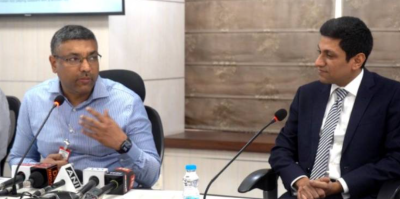
The IndiaAI Mission, spearheaded by the Ministry of Electronics and Information Technology (MeitY), has officially introduced Varya, India’s first homegrown, distilled artificial intelligence video story-generation model. Developed by Bengaluru-based deep-tech startup Avataar.ai, the foundation model was unveiled in New Delhi on June 12, 2026, in the presence of MeitY Secretary S. Krishnan. Varya represents a strategic pivot under the country’s sovereign AI roadmap, aimed at deploying affordable, population-scale digital tools tailored specifically to the country’s diverse cultural landscape.

Core Architectural Framework and Distillation Technique

Varya is built as a highly optimized, compressed derivative of the publicly available global video generation model, Wan 2.2, which was developed by Alibaba. Avataar.ai modified this base architecture by utilizing a machine learning process known as model distillation.

Step Reduction Mechanism

Standard foundational video models generate clean outputs by executing an iterative denoising process across more than 50 computational steps. Varya applies algorithmic distillation to train a smaller “student” model that bypasses the bulk of these iterative loops. As a result, the model shrinks the generation requirement from 50 steps down to just 4 steps, preserving output quality while minimizing computational overhead.

Computational Efficiency and Speed

The drastic reduction in processing loops directly translates to high-speed inference cycles. When deployed on standard enterprise hardware, such as an NVIDIA H200 Graphics Processing Unit (GPU), Varya creates a five-second 720p resolution video clip in roughly 45 seconds. In comparison, the undistilled base model requires approximately 1,230 seconds to deliver an equivalent output on identical hardware parameters.

Cost Parameters and Economic Viability

The fundamental value proposition of the model lies in its low operating cost, establishing visual media creation tools as an accessible utility rather than a high-cost luxury.

Parameter MetricsGlobal Foundational Video ModelsIndigenous Varya Model
Inference Cost Per Second₹8.00 to ₹10.00 ($0.10 to 0.12)</td> <td>₹0.48 (0.005)
Comparative Cost MultiplierStandard market rate baselineUp to 10x more cost-efficient
Underlying Iteration Steps50+ steps4 steps
Hardware Processing RequirementsHigh-end GPU clusteringLow-compute optimized environments

Cultural Contextualization and Dataset Training

Unlike western or generic global video models trained predominantly on Eurocentric and North American internet data, Varya is explicitly conditioned on local visual and cultural nuances. Global models frequently generate stereotypical or inaccurate representations when prompted for non-Western subjects.

Targeted Training Datasets

Avataar.ai trained the model using 40,000 highly curated Indian cultural datasets. This dataset ensures precise rendering of:

  • Regional Attire: Accurately differentiating traditional garments, weaving patterns, and local drapes across various states.
  • Festivals and Communities: Correctly visualizing local rituals, community gatherings, and distinct regional festivities.
  • Architecture and Public Spaces: Generating structures, streetscapes, and geographical backdrops that match the actual environments found across rural and urban landscapes.
  • Culinary Diversity: Recognizing and accurately depicting regional food items, preparations, and dining contexts.

Targeted Deployments and Use Cases

The model operates via a simple text-to-video prompt interface where users can also upload a static image to initialize a video sequence. The software allows sequential clip extension to form continuous narratives, making it highly valuable across multiple downstream applications.

Micro, Small, and Medium Enterprises (MSMEs)

Small businesses can generate professional product advertisements, social media promotional material, and localized marketing campaigns without hiring expensive production agencies or renting high-end computing power.

Education Sector

School teachers and digital educators, especially in rural and tier-2 or tier-3 towns, can create animated visual lessons, historical explainers, and science diagrams to improve student retention and engagement.

Public Governance and Citizen Services

Government departments and local administrations can convert complex policy text, health circulars, and civic updates into crisp, multilingual animated videos to maximize public dissemination.

IASPOINT Booster Facts for UPSC

  • The IndiaAI Mission: Approved by the Union Cabinet with an allocation of over ₹10,372 crore, this umbrella sovereign AI programme seeks to establish a computing ecosystem of more than 10,000 GPUs, develop indigenous foundational models, and bridge the digital divide.
  • The AI Kosh Portal: Varya has been released as an open-weight model on India’s centralized AI Kosh portal. This platform functions as a government-curated national repository for open-source AI models, weights, and localized datasets, allowing Indian developers to host, adapt, and build custom apps on top of it.
  • Frugal Innovation in AI: Rather than pursuing raw parameter size like Western labs, the Indian AI strategy focuses on inference efficiency, extreme cost compression, and context awareness to deploy tools viable for a nation of 1.4 billion citizens.
  • Sovereign AI Companions: Varya joins other major indigenous foundational projects supported by the IndiaAI Mission compute subsidies, including Sarvam AI’s multilingual large language models and the BharatGen initiative.
  • Funding and Selection: Avataar.ai is one of the 12 deep-tech startups formally selected under the IndiaAI Mission’s foundation model development cohort. The company is backed by prominent venture firms including Peak XV Partners and Tiger Global, having raised $55 million prior to its foundation model pivot.
Last Modified: June 13, 2026

Leave a Reply

Your email address will not be published. Required fields are marked *

Archives