
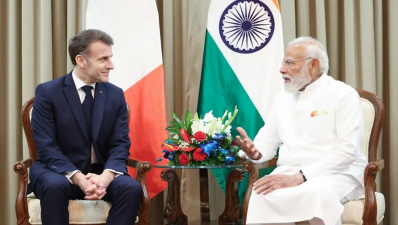
India and France are rapidly expanding their bilateral partnership into the domains of artificial intelligence and emerging deep technologies. French President Emmanuel Macron’s physical participation in the India AI Impact Summit held at Bharat Mandapam, New Delhi, in February 2026, alongside Indian Prime Minister Narendra Modi, cemented this technology-first diplomatic approach. Central to this integration is the formal observation of the India-France Year of Innovation 2026, an initiative designed to establish operational synergy across computational research, commercial startups, and manufacturing supply chains, transitioning the relationship from mere defense procurement to collaborative deep-tech co-development.
Frameworks of Technological Collaboration
The digital partnership operates under structurally defined collaborative ecosystems designed to link academic knowledge with market execution.
The India-France Year of Innovation 2026
Inaugurated jointly by both heads of state in Mumbai on February 17, 2026, this year-long program functions as the umbrella framework for bilateral tech diplomacy. It prioritizes cross-border knowledge transfer in artificial intelligence, advanced computing, cyber defense, and green technology applications.
Indo-French Innovation Network
Launched as the operational flagship initiative under the Year of Innovation, this network establishes a direct pathway connecting Indian tech enterprises with French industrial entities. It facilitates funding pools, multi-institutional research and development projects, and regular technology validations.
Bharat Innovates 2026
Organized by the Union Ministry of Education in Nice, France, this premier deep-tech exhibition showcases 120 curated Indian startups and 15 premier Higher Education Institutions directly to European venture capitalists and corporate buyers. The event directly targets cross-border scaling of foundational technologies.
Key Focus Areas and Downstream Sectors
The scope of cooperation covers several deep-tech vectors to secure economic and technological sovereignty for both nations.
| Technology Vector | Core Operational Objectives | Key Strategic Targets |
| Artificial Intelligence | Co-development of ethical models; sovereign compute deployment | Applied AI for health, farming, and climate resilience |
| Semiconductors | Supply chain diversification; joint chip design frameworks | Reducing reliance on single-source East Asian foundries |
| Quantum Computing | Collaborative algorithmic research; quantum cryptography | Securing public financial and defense communication networks |
| Critical Minerals | Securing bilateral mineral processing loops | Processing lithium, cobalt, and rare earth elements |
| Cybersecurity | Unified malware tracking; joint threat intelligence sharing | Protecting public utility grids and financial backbones |
High-Yield Sector Breakdown
- Advanced Manufacturing: Blending AI and machine learning into aerospace assembly, automotive design, and precise robotics to optimize output efficiency.
- Digital Public Infrastructure (DPI): Exporting India’s open-source digital public goods architecture to the European Union market.
- Space Technology: Collaborating on intelligent satellite imagery analysis systems for weather forecasting and spatial analytics.
Digital Payments and Ecosystem Merging
Bilateral tech integration is highly visible in retail financial systems and enterprise incubation networks.
Unified Payments Interface (UPI) Expansion
Following a 2023 agreement between NPCI International Payments Limited and France’s Lyra Collect, India’s UPI became operational at the Eiffel Tower in January 2024. This payment grid expanded to Galeries Lafayette in July 2024 and La VallΓ©e Village Concierge in 2025. By mid-2026, continuous rollouts are active across French transport networks, major airports, and museum ticketing terminals to benefit international travelers.
Start-up Incubation Pipelines
Indian deep-tech ventures are receiving dedicated access to European markets through the Station F-HEC Paris International Launchpad programme. Operating continuously since May 2025, this initiative brings cohorts of competitive Indian startups directly into the largest startup campus in the world, located in Paris, providing them with corporate acceleration resources and structural funding networks.
IASPOINT Booster Facts for UPSC
- The India AI Impact Summit 2026: Hosted at Bharat Mandapam in New Delhi from February 16 to 21, 2026, this event was the first global AI summit hosted by a nation in the Global South. It shifted global tech conversations from standard risk regulation toward practical economic development using “Applied AI.”
- Summit Architectural Anchors: The New Delhi summit operated on the foundational philosophy of “Sarvajana Hitaya, Sarvajana Sukhaya.” It was structured around Three Sutras (People, Planet, Progress) and Seven Chakras representing active thematic working groups like Health, Agriculture, and Safe AI.
- The AI Commons Concept: India used the summit to advocate for an “AI Commons” framework, pushing for open-weight models, computational resources, and localized training datasets to be shared freely with developing nations.
- The Horizon 2047 Roadmap: Bilateral technology goals are strictly aligned with the India-France Horizon 2047 Roadmap signed during PM Modi’s visit to Paris as the Guest of Honour for France’s National Day (Bastille Day) on July 14, 2023.
- Global Governance Affiliations: Both India and France are founding members of the Global Partnership on Artificial Intelligence (GPAI), an international initiative established in 2020 to guide the responsible development and utilization of artificial intelligence globally.
- The Paris AI Action Summit 2025: The New Delhi summit built upon the outcomes of the AI Action Summit hosted in Paris in February 2025, which prioritized global coordination on AI safety boundaries and enterprise innovation.
