
Daily Activities

UPSC Prelims Current Affairs

UPSC Mains Current Affairs

Current Affairs

SOLAR-1 Space Weather Monitoring Satellite

SOLAR-1 Space Weather Monitoring Satellite

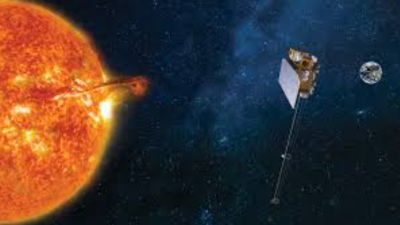
The United States National Oceanic and Atmospheric Administration (NOAA) has officially activated SOLAR-1, its first dedicated operational space weather monitoring satellite. Positioned at the Sun-Earth Lagrange Point 1 (L1) roughly one million miles (1.6 million kilometers) from Earth, the spacecraft achieved full operational capability on June 10, 2026. Initially launched on September 24, 2025, via a SpaceX Falcon 9 rocket under the name Space Weather Follow On–Lagrange 1 (SWFO-L1), it was renamed upon entering its final orbital position to mark its critical role in planetary defense against solar radiation.

Core Mission Objectives

The primary mission of SOLAR-1 is to provide continuous, 24/7 observations of solar phenomena and the interplanetary medium. Unlike previous scientific research satellites that were repurposed for monitoring, this satellite is engineered specifically for operational early warnings.

Direct Monitoring Targets
  • Coronal Mass Ejections (CMEs): Tracking large expulsions of plasma and magnetic fields from the solar corona.
  • Solar Wind Disturbances: Measuring changes in the velocity, density, and temperature of plasma streams moving away from the Sun.
  • Solar Energetic Particles: Detecting high-energy streams that pose immediate radiation hazards.

Key Scientific Instruments

The spacecraft operates a specialized four-payload configuration to measure environmental metrics in situ and via remote sensing.

Compact Coronagraph (CCOR-2)

This solar telescope blocks the direct bright light of the solar disk to reveal the much fainter outer atmosphere. It captures immediate images of erupting CMEs with a wide field of view stretching from 3 to 23.5 solar radii.

Solar Wind Instrument Suite (SWIS)

SWIS contains three distinct sub-sensors designed to analyze the particle and magnetic properties directly hitting the spacecraft:

  • Solar Wind Plasma Sensor (SWiPS): Measures the density, speed, and thermal properties of incoming solar ions.
  • SupraThermal Ion Sensor (STIS): Tracks high-energy particles accelerated by solar flares and interplanetary shocks.
  • Magnetometer (MAG): Quantifies the direction and strength of the local interplanetary magnetic field.

Operational Metrics and Speed Advantages

SOLAR-1 offers a steep reduction in data latency compared to legacy space systems like the aging SOHO, ACE, and DSCOVR satellites.

Metric ParameterLegacy Platforms (e.g., SOHO / ACE)New SOLAR-1 System
CME Imagery Delivery LatencyUp to 8 hoursUnder 30 minutes
In Situ Solar Wind Data LatencyHighly variableWithin 5 minutes
Operational DesignationRepurposed Research SatellitesFully Dedicated Operational Asset
Observation ContinuityProne to interruptionsUnobstructed 24/7 coverage

Infrastructure Protection Capabilities

Rapid transmission allows NOAA’s Space Weather Prediction Center in Boulder, Colorado, to issue actionable alerts before geomagnetic storms reach Earth. Critical sectors protected by these early warnings include:

Power and Communications Infrastructure

High-impact solar storms generate geomagnetically induced currents that can saturate and blow out high-voltage transformers, crippling electrical grids. Early warnings allow utility companies to balance electrical loads defensively. Additionally, high-frequency radio blackouts can be anticipated, allowing aviation and maritime transport operators to switch to alternative navigation methods.

Space and Satellite Operations

Satellite operators can place delicate orbital hardware into safe mode to prevent electrical arching and fried circuitry. This warning timeline protects Global Positioning System (GPS) and Global Navigation Satellite System (GNSS) arrays from signal scintillation, ensuring navigation accuracy remains uncompromised. It also gives ground teams time to move astronauts aboard space stations or future deep-space missions into heavily shielded modules to avoid lethal radiation sickness.

IASPOINT Booster Facts for UPSC

  • Lagrange Point 1 (L1) Mechanics: L1 is a position where the gravitational forces of the Sun and the Earth perfectly balance the centripetal force required for a spacecraft to move with them. This creates a stable orbital zone requiring minimal fuel consumption for station-keeping.
  • Uninterrupted View: Because L1 lies directly along the Sun-Earth line, satellites stationed there never experience an eclipse or pass through the Earth’s shadow, allowing permanent solar viewing.
  • Space Weather Follow On (SWFO) Program: SOLAR-1 is a key piece of the SWFO program. It works alongside space weather instruments mounted on the Earth-orbiting GOES-19 satellite (which carries the CCOR-1 instrument variant).
  • Global Counterparts: SOLAR-1 shares its L1 vantage point with India’s Aditya-L1 mission, launched by ISRO in 2023, which also carries payloads like the Visible Emission Line Coronagraph (VELC) and Plasma Analyser Package for Aditya (PAPA) to study solar dynamics.
  • Future Resilience: NOAA has already awarded contracts for the development of successor observatories, tentatively designated as SOLAR-A and SOLAR-B, under its Space Weather Next program to guarantee observations past the 2030s.
Last Modified: June 13, 2026

Leave a Reply

Your email address will not be published. Required fields are marked *

Archives