
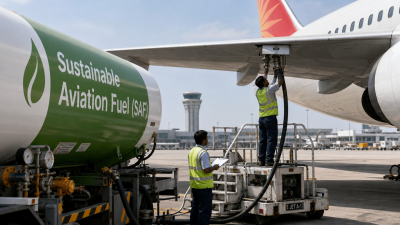
A report released on 23 June 2026 by the India Energy & Climate Center (UC Berkeley) and Energy Innovation states India can produce sustainable aviation fuel (SAF) up to 40% cheaper than global benchmarks using a Power-and-Biomass-to-Liquids (PBtL) approach.
PBtL pathway
- Process: Gasify agricultural residue to produce synthesis gas (CO+H2), supplement with green hydrogen, and convert to jet-range hydrocarbons via the Fischer–Tropsch process.
- Feedstock: Predominantly rice straw and wheat straw; uses surplus crop residue rather than food crops.
- Green hydrogen: Produced by electrolysis using renewable electricity, notably low-cost solar in parts of India.
Cost, scale and projections
- Cost advantage: Up to 40% cheaper than international benchmarks (report dated 23 June 2026).
- Export potential: Supply of 25% of global SAF market → ~USD 9 billion annual exports by 2030; ~USD 30 billion by 2040.
- Residue demand: Requires ~4% of India’s surplus crop residue by 2030 and ~13% by 2040 for those export levels.
Deployment geography and pilots
- Priority states: Maharashtra, Haryana, Rajasthan, Uttar Pradesh (biomass and renewable power potential).
- Airport clusters: Near Delhi, Pune and Mumbai identified as promising initial project locations.
- Existing certification: BPCL’s Mumbai refinery received ISCC CORSIA certification (May 2026) for UCO co‑processing; commercial operation expected by end‑2026.
Policy and standards recommendations
- Measures: Demonstration projects, concessional finance/viability‑gap funding for green hydrogen, streamlined approvals, and incentives tied to verifiable green hydrogen.
- Standards: Align Indian SAF specifications with EU/UK requirements.
- Mandates: Mandatory international SAF blending: 1% from 2027, 2% from 2028, 5% by 2030 (as of 8 June 2026).
IASPOINT Booster Facts
- Fischer–Tropsch: Catalytic conversion of syngas (CO+H2) into liquid hydrocarbons; requires H2:CO ratio management.
- ISCC CORSIA: Certification scheme to verify SAF lifecycle emissions compliance for ICAO’s CORSIA framework.
- Pathway distinction: PBtL differs from HEFA (oil feedstock) and alcohol‑to‑jet routes; PBtL uses lignocellulosic biomass plus electrolytic H2.