
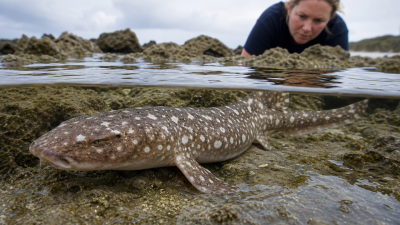
Scientists described a new walking shark species, Hemiscyllium dudgeonae (local name “kadedekedewa”), from Milne Bay, Papua New Guinea; description published 15 June 2026.
Taxonomy & Identification
- Scientific name: Hemiscyllium dudgeonae; tenth recognised species in genus Hemiscyllium.
- Local name: kadedekedewa (translated loosely as “lazy shark” or “dog shark”).
- Diagnostic traits: distinctive brown freckles with white spots and dashes; confirmed by genetic analyses.
- Locomotion: uses muscular pectoral and pelvic fins to “walk” across coral substrate.
Distribution & Ecology
- Type locality: Milne Bay, southeastern Papua New Guinea; first observed March 2025.
- Range: smallest known geographic range among walking sharks; restricted to shallow coral reefs and tide pools.
- Size & habits: adults ~70–80 cm long; nocturnal; feed mainly on small invertebrates.
- Amphibious tolerance: can survive out of water in tide pools for up to two hours.
Conservation & Research
- Publication: formal description published in Journal of the Ocean Science Foundation, 15 June 2026; species named for ecologist Christine Dudgeon.
- Threats: highly vulnerable to coral loss, coastal development, localized fishing pressure and climate change.
- IUCN outlook: likely to meet criteria for a threatened category (Vulnerable or Endangered) pending formal assessment.
- Next steps: targeted field surveys planned October 2026 to collect data for IUCN Red List assessment.
IASPOINT Booster Facts
- Genus Hemiscyllium: restricted to Indo‑Pacific shallow reefs; known as “walking sharks” due to limb‑like fin use.
- Species delimitation: combined morphological patterning and molecular genetics is standard for shark descriptions.
- IUCN criteria to watch: extent of occurrence, area of occupancy and continuing decline in habitat or population.