
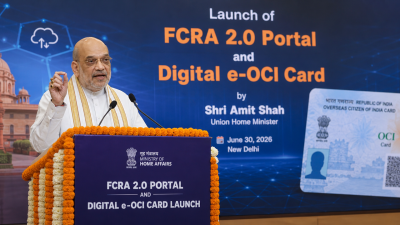
On 30 June 2026 the Union Home Ministry launched the FCRA 2.0 Portal and an electronic OCI (e-OCI) Card system to digitise FCRA procedures and Overseas Citizen of India services.
FCRA 2.0 Portal — key features
- Digitisation: Full e-processing of FCRA applications, renewals and annual returns.
- Integrated databases: Linked with Aadhaar, PAN, OCI, NGO Darpan and ICAI’s UDIN for automated verification.
- Hosting: Deployed on National Government Cloud (MeghRaj).
- Operational tools: Real-time monitoring dashboards and planned bank dashboards; AI-powered chatbots for user support.
e-OCI Card — key features
- End-to-end digital: Application, processing and downloadable e-card available online and on mobile.
- Passport renewal rule: No physical re-issuance of OCI booklet after passport renewal post-20 years; online passport detail update required.
- Coverage: Applicable to about 5 million OCI cardholders globally.
Scale and workload
- Registered entities: Approximately 14,500 active FCRA-registered organisations in India.
- Processing capacity: Portal designed to handle 15,000–20,000 applications and ~17,000 annual returns annually.
Legal and administrative links
- FCRA framework: FCRA (2010) governs receipt and utilisation of foreign contributions; requires registration/prior permission and annual returns (administered by the Home Ministry).
- UDIN: ICAI’s Unique Document Identification Number used for statutory document authentication.
IASPOINT Booster Facts
- FCRA timeline: 2010 Act replaced the 1976 Act; major amendments enacted in 2020.
- OCI origin: OCI scheme introduced in 2005 to grant lifelong visa and residency-related privileges to persons of Indian origin.