
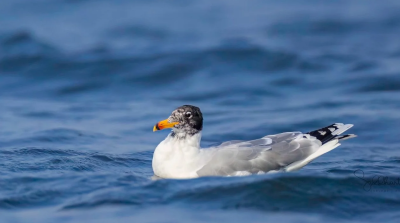
The Pallas’s Gull (Ichthyaetus ichthyaetus), also known as the great black-headed gull, has been sighted for the first time at Chandratal Lake, Spiti Valley, Himachal Pradesh. Situated at an elevation of 4,298 meters, this is one of the highest altitude records for the species in India, highlighting the significance of Trans-Himalayan wetlands as critical stopover habitats for migratory birds.
Species Profile: Pallas’s Gull
- Characteristics: Largest gull within its genus; features a distinctive white body, grey wings, a black head (during breeding), and a strong yellow bill with a red tip.
- Ecological Role: Acts as a biological indicator for the health of wetland ecosystems.
- Migration: Breeds in Central Asia (Caspian Sea, Mongolia); winters along the Mediterranean, Persian Gulf, and the Indian subcontinent.
- IUCN Status: Least Concern.
Significance of Chandratal Lake
- Ramsar Site: Designated in 2005, it is a vital ecological node for migratory species in the arid, cold desert of Spiti.
- Refuge: Provides essential foraging grounds (fish/aquatic invertebrates) and serves as a high-altitude sanctuary, away from human-induced disturbances found at lower levels.
IASPOINT Booster Facts
- Scientific Validation: The sighting was documented in the Journal of the Bombay Natural History Society.
- Range: Historically sighted in Ladakh and Pong Dam (HP) before this record.
- Flyway: Associated with the Central Asian Flyway (CAF), a critical migration route spanning from the Arctic to the Indian Ocean.
- Threats: Climate change (phenological mismatch), habitat loss, and infrastructure development in fragile mountain ecosystems.