
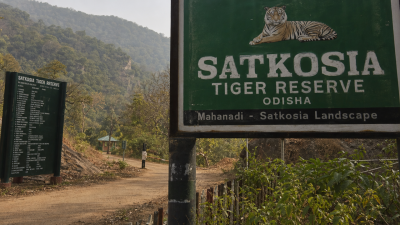
On 30 June 2026 the National Tiger Conservation Authority (NTCA) gave in‑principle approval to Odisha to resume tiger reintroduction in Satkosia Tiger Reserve subject to compliance with specified conditions.
Reserve and current status
- Area: Satkosia Tiger Reserve — 1,136 sq km (core 523 sq km).
- Tiger presence: No resident tigers as of 2026; two translocated in 2018 did not establish a breeding population.
- 2018 translocation outcome: One male died in a poacher’s snare; the female was captured following conflict and returned to source state.
- Legal interruption: Odisha Human Rights Commission suspended relocation in Feb 2024 citing procedural lapses and rights concerns.
NTCA approval: conditions
- Voluntary village relocation: consent‑based resettlement to create buffer/inviolate zones.
- Prey augmentation: scientific measures to raise wild prey densities before translocation.
- Inviolate space: legally protected areas free from human habitation and extractive use.
- Staff capacity & protection: enhanced field staff, anti‑poaching infrastructure and monitoring systems.
- Final clearance: state to assess ground readiness before seeking MoEFCC final approval.
Reports, policy and planning
- NTCA‑WII report (28–29 June 2026): “Reintroduction & Population Recovery of Tigers in India” cites Satkosia as a field learning case.
- MoEFCC roadmap (29 June 2026): Satkosia listed among 25 tiger reserves needing priority intervention and planned reintroductions.
- Planned cohort sites: Strategies being finalised concurrently for Buxa (WB) and Palamu (Jharkhand).
IASPOINT Booster Facts
- NTCA role: Nodal statutory authority for tiger conservation; issues permissions for translocations under national tiger conservation framework.
- Technical support: Wildlife Institute of India provides field protocols, monitoring and evaluation for reintroduction projects.
- Translocation prerequisites: established practice requires prey base, inviolate core, community consent, veterinary protocols and anti‑poaching capacity.