
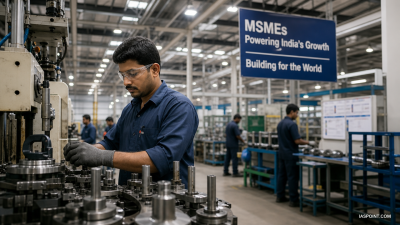
On 16 July 2026 CTIL at the Indian Institute of Foreign Trade, with the Confederation of Indian Industry, launched Going Global: A Practical Guide for Indian MSMEs. The guidebook provides practical trade intelligence, FTA guidance, and compliance advice to help MSMEs enter export markets and join global value chains.
What is the issue
Indian MSMEs account for large employment and manufacturing shares but face low representation in exports and global value chains. The guidebook is a practical instrument to reduce information costs, explain market-access rules, and provide pointers on standards and sustainability required by importers.
Why it matters
- Economic development: Greater MSME export participation raises output, employment and foreign exchange earnings.
- Governance and trade policy: Effective use of FTAs, rules of origin, and trade remedies protects domestic firms and improves competitiveness.
- International relations: MSME exports support trade diplomacy and bilateral commercial ties.
- Environment: Compliance with sustainability norms determines continued market access, especially to advanced economies.
Structural bottlenecks in integrating MSMEs into GVCs
- Information asymmetry: Limited access to reliable market intelligence and buyer networks. High cost of market research deters entry.
- Compliance burden: Costs and expertise required for ISO, product standards, testing and sustainability certifications are high for small units.
- Finance and pricing: Restricted access to affordable working capital increases costs and reduces price competitiveness.
- Logistics and scale: Fragmented production, weak clustering and high logistics costs impede timely delivery and scale economies.
- Digital adoption: Low digital presence reduces discoverability on international platforms and use of trade intelligence tools.
FTAs, Rules of Origin and capacity building
MSMEs underuse India’s FTAs because rules of origin are complex and documentation-intensive. Practical guidance on origin criteria, tariff lines and cumulation can increase preferential utilisation. Capacity building must cover:
- FTA helpdesks: Operational guidance on origin proofs and documentary procedures.
- Trade intelligence: Training on free online tools to identify markets, tariff schedules and buyer contacts.
- Cluster-level support: Assistance in group certification and aggregated compliance to meet origin and quality rules.
Trade remedies and institutional support
Trade remedies comprise anti‑dumping duties, countervailing measures and safeguard measures. These tools permit defensive action against injurious foreign pricing, subsidisation, or sudden import surges. The Trade Remedies Advisory Cell (TRAC) at CTIL provides pro‑bono legal, cost‑accounting and economic expertise to MSMEs for filing or defending cases.
| Instrument | Purpose | MSME relevance |
|---|---|---|
| Anti‑dumping | Counter below‑cost imports | Protects local producers from predatory pricing |
| Countervailing | Counter foreign subsidies | Levels playing field when foreign firms gain unfair advantage |
| Safeguard | Address sudden import surges | Provides temporary relief to adjust production |
Compliance with international standards and sustainability norms
- Technical standards: ISO, ASTM, IEC and buyer‑specific standards require testing and process changes.
- Sustainability norms: Measures such as the EU Green Deal and CBAM impose carbon accounting and reporting; non‑compliance can exclude MSMEs from key markets.
- Cost of certification: Testing labs, audit fees and process upgrades are barriers without targeted subsidies or shared facilities.
Practical policy measures and institutional actions
- Information and digital tools: Promote adoption of guidebooks, trade intelligence platforms and a centralised FTA/ROO portal.
- Certification support: Subsidised testing, accredited common facility centres and cluster certification programmes.
- Credit and insurance: Expand concessional credit lines, export factoring and export credit insurance tailored to MSMEs; strengthen CGTMSE coverage.
- TRAC outreach and FTA helpdesks: Scale TRAC pro‑bono services; set up FTA helpdesks at major export clusters and ports.
- Market access facilitation: Support participation in buyer‑seller meets, e‑marketplaces and pooled shipping to reduce unit logistics cost.
- Green transition support: Technical assistance and targeted grants for energy efficiency, emissions accounting and port‑level carbon services to meet CBAM and buyer demands.
- Regulatory simplification: Streamline origin documentation, digitise certificates of origin and permit group filings for clusters.
Model Questions
1. Examine the structural challenges that hinder the integration of Indian MSMEs into Global Value Chains (GVCs). Suggest policy measures to address these bottlenecks. [GS-III: Economic Development]
Write a condensed answer in 60-70 words covering all points /dimensions in short. MSMEs face information asymmetry, high compliance costs, limited finance, poor logistics and low digital adoption. Policies should reduce market‑research costs using trade intelligence tools and guidebooks, provide concessional finance and export credit, subsidise testing and certifications, strengthen clusters and common facility centres, expand digital market access, and improve logistics through pooled shipping and export facilitation. TRAC and FTA helpdesks are needed for legal and procedural support.
2. Explain trade remedies under international trade law and assess how institutional mechanisms like TRAC protect Indian MSMEs from unfair trade practices. [GS-III: Economic Development]
Write a condensed answer in 60-70 words covering all points /dimensions in short. Trade remedies include anti‑dumping duties, countervailing measures and safeguards to counter injurious pricing, subsidies and import surges. MSMEs lack resources to invoke these remedies. TRAC at CTIL provides pro‑bono legal, cost‑accounting and economic expertise to prepare evidence, calculate injury and navigate procedures. Outreach, simplified procedures and cluster support enable MSMEs to use remedies effectively and deter unfair competition.
3. How can Indian MSMEs optimise benefits from India’s Free Trade Agreements and Rules of Origin? Analyse the role of capacity‑building initiatives. [GS-II: International Relations]
Write a condensed answer in 60-70 words covering all points /dimensions in short. MSMEs often miss preferential tariffs due to complex rules of origin and documentation. Optimisation requires FTA helpdesks, practical guidance on origin criteria, and aggregated compliance via clusters. Capacity building must include training on tariff lines, electronic certificates of origin, use of free trade intelligence tools, and buyer identification. Group certification and cumulation provisions can raise preferential utilisation and market access for small exporters.
4. Analyse the impact of international sustainability norms on Indian MSMEs seeking global market access and propose mitigation measures. [GS-III: Environment & DM]
Write a condensed answer in 60-70 words covering all points /dimensions in short. Global sustainability norms, including carbon reporting and standards under policies like the EU Green Deal and CBAM, raise compliance costs and create non‑tariff barriers. MSMEs risk market exclusion without technical capacity. Mitigation requires targeted grants for green upgrades, shared testing and certification facilities, training in emissions accounting, concessional finance for clean technology, and integration of green criteria in cluster development and export promotion schemes.
Last Modified: July 17, 2026