
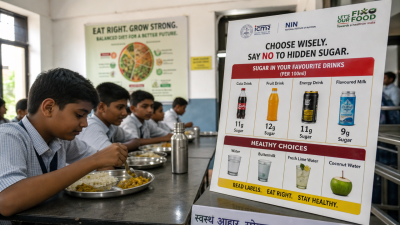
Schools are central to a widening adolescent nutrition crisis. Recent surveys show rising obesity and high blood sugar alongside persistent stunting and metabolic risk. Rapid growth of ultra‑processed foods (UPFs) and sedentary behaviour are shifting diets. Policy action in schools can alter lifelong health trajectories and national human capital.
What the problem is and why it matters
Epidemiological profile
- Double burden — Undernutrition (CNNS: 27.4% adolescents stunted) coexists with rising overweight, obesity and hyperglycaemia (NFHS‑6: women’s obesity 30.7%; men’s 27.3%; high blood sugar up in both sexes).
- Metabolic risk in early life — Stunted children showing adult‑level triglycerides signal early onset of non‑communicable disease risk.
- UPF trend — Ultra‑processed food consumption growing at >13.7% annually; these products displace whole foods and raise HFSS exposure.
Impact on adolescent health and national development
- Health — Impaired growth, micronutrient deficiency, early cardiometabolic disease, mental‑health effects and higher adolescent morbidity.
- Cognitive and educational — Nutritional deficits reduce concentration, learning outcomes and school performance.
- Economic — Reduced workforce productivity, higher healthcare costs and erosion of the demographic dividend.
- Equity — Rural areas and poorer households now share rising obesity and metabolic risk, widening health inequities.
Ultra‑Processed Foods (UPFs): drivers and harms
- Drivers — Urbanisation, convenience culture, aggressive marketing, price points, longer shelf life, and digital advertising targeting adolescents.
- Behavioural factors — Sedentary lifestyles and screen time reduce fruit and vegetable intake and increase UPF consumption.
- Health effects — Excess calories, added sugars, salt and unhealthy fats cause weight gain, insulin resistance, dyslipidaemia and displacement of nutrient‑rich foods.
Role of schools in prevention and intervention
Rationale
Schools reach large adolescent cohorts during formative years. They shape food availability, knowledge, peer norms and physical activity patterns. Interventions in schools produce population‑level shifts in dietary behaviour.
School‑level measures
- Supply‑side — Create UPF‑free zones on campus; ban or phase out sale of sugary beverages and HFSS snacks within and near premises.
- Information tools — Display “sugar boards” and simple front‑of‑pack explanations for students and parents; incorporate Dietary Guidelines 2024 message (half plate fruits/vegetables).
- Food provision — Align mid‑day meals and school canteens with Dietary Guidelines; increase fruit and vegetable portions; introduce healthy snacks and drinking‑water provision.
- Curriculum and literacy — Integrate nutrition education into life‑skills and health curricula; train teachers and canteen staff; use peer educators.
- Physical activity — Mandate daily active time; limit screen‑based classroom activities that substitute movement.
- Parental and community engagement — School‑home communication on healthy meals, cooking skills and reducing purchase of UPFs.
| School intervention | Required policy / institutional support |
|---|---|
| UPF‑free campus and vendor controls | Guidelines and enforcement by education and health departments; local municipal licensing; vendor training |
| Nutrition‑aligned mid‑day meals and canteen menus | Menu standards, budget support, supply chain (local procurement), monitoring by school health teams |
| Nutrition curriculum and teacher training | Education board mandates, teacher capacity building, integration into state syllabi |
| Advertisements and marketing limits near schools | Regulatory action on HFSS advertising targeting adolescents; local ad control |
Policy, institutional frameworks and initiatives
- Dietary Guidelines for Indians 2024 — Recommends half the plate by volume be fruits and vegetables; guides menu standards and education content.
- Let’s Fix Our Food (LFOF) — ICMR‑NIN initiative focusing on policy advocacy, nutrition literacy and regulatory recommendations such as HFSS advertising control and a school nutrition curriculum.
- Inter‑sectoral coordination — Health, Education, Food Regulatory agencies and Local Governments must align on standards, enforcement and monitoring.
- Existing programme linkages — Leverage PM POSHAN, RKSK, WIFS and school health programmes for screening, supplementation and referral pathways.
Regulation and market governance
- Advertising and labelling — Restrict HFSS advertising aimed at adolescents; adopt clear front‑of‑pack labelling and school‑area advertising bans.
- Fiscal measures — Consider taxes or minimum pricing on sugar‑sweetened beverages and targeted subsidies for fresh produce in school procurement.
- Vendor licensing — Use school licence conditions and municipal controls to regulate foods sold around schools.
Challenges
- Commercial resistance — Food industry pushback against advertising restrictions and product bans.
- Resource constraints — Budget, supply chain and refrigeration needs for fresh produce in remote schools.
- Behavioural inertia — Habit formation, parental preferences and peer pressure favouring UPFs.
- Monitoring and enforcement — Capacity gaps at state and local levels to enforce school food policies and curb out‑of‑school vendors.
Way forward — operational priorities
- Policy mix — Combine regulation (advertising, labelling), fiscal nudges (tax/subsidy) and supply interventions (menu standards, local procurement).
- School implementation package — National model for UPF‑free campuses, sugar boards, standardised healthy canteen menus, teacher training and monitoring checklist.
- Data and surveillance — Strengthen school‑level nutrition screening, use digital dashboards to track BMI, anaemia and dietary indicators.
- Community partnerships — Engage parents, local producers and NGOs for fresh supply chains, kitchen gardens and nutrition education drives.
- Equity focus — Additional support for rural and low‑income schools: logistics subsidies, capacity building and scaled behaviour change campaigns.
Model Questions
1. Examine the implications of India’s double burden of malnutrition on adolescent health and national development. [GS-I: Indian Society]
India’s double burden—persistent stunting alongside rising obesity and hyperglycaemia—impairs adolescent physical growth, cognitive development and school outcomes. Early metabolic risk raises lifetime NCD prevalence, increasing health expenditure and reducing labour productivity. Rural and low‑income groups face widening inequities. Policy failure to address both under‑ and overnutrition threatens the demographic dividend, labour quality and sustainable economic growth, requiring integrated nutrition and health strategies.
2. Discuss specific measures schools can adopt and the policy support required to create healthier food environments and combat UPF impact. [GS-II: Governance]
Schools should establish UPF‑free campuses, ban sugary drinks and HFSS sales, display sugar boards, align mid‑day meals with Dietary Guidelines 2024, train teachers in nutrition and mandate daily physical activity. Policy support needed includes regulatory backing for advertising restrictions, FOP labelling, vendor licensing, budgetary support for fresh procurement, and inter‑departmental coordination between education, health and food regulatory authorities.
3. Analyse socio‑economic factors driving rising UPF consumption in India and their contribution to adolescent malnutrition. [GS-III: Economic Development]
Urbanisation, dual‑income households, convenience demand, low unit prices of UPFs, and aggressive marketing (including digital channels) drive higher UPF uptake. Reduced time for food preparation and longer school days increase reliance on packaged foods. UPFs displace nutrient‑rich diets, raise calorie and sugar intake, and foster sedentary habits—fueling obesity, insulin resistance and long‑term healthcare costs, especially among lower‑income urbanising populations.
4. Critically evaluate the efficacy of institutional and awareness‑based approaches, such as the ICMR‑NIN ‘Let’s Fix Our Food’ initiative, in addressing adolescent malnutrition. [GS-II: Social Justice]
Institutional initiatives that combine policy advocacy, nutrition literacy and regulatory advice can shift norms and strengthen standards. LFOF‑style approaches build evidence, inform advertising controls and curriculum reform. Their efficacy depends on enforcement capacity, funding, school adoption, and access to affordable healthy foods. Awareness alone is insufficient; coupling literacy with regulatory measures, fiscal incentives and community‑level supply interventions is necessary for scalable impact.
Last Modified: June 30, 2026