
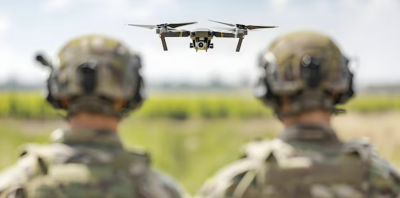
Unmanned aerial vehicles (UAVs) are increasingly deployed from manned aircraft to enhance aerial warfare capabilities. Key military forces globally have tested and operationalised drone launch systems integrated into fighter jets and bombers. These systems enable rapid deployment of multiple drones during combat missions.
Technological Developments
Modern drone deployment involves internal and external launch mechanisms on aircraft such as F-35, Su-57, and B-52. These platforms carry swarms of drones equipped with sensors, electronic warfare tools, or precision munitions. Launch systems use pneumatic, rocket, or rail-based ejectors to release UAVs mid-flight.
Operational Capabilities
Drones launched from aircraft extend reconnaissance, target acquisition, and strike capabilities beyond the range of manned platforms. Swarm tactics allow coordinated drone attacks against enemy air defences and ground targets. Some drones operate autonomously or under remote control, enabling flexible mission profiles.
Military Applications
The US Air Force’s Skyborg programme integrates AI-driven drones launched from fighters for surveillance and combat roles. Russia’s Okhotnik-B drone operates alongside Su-57 jets for joint missions. China develops drone swarms launched from bombers for electronic attack and decoy functions.
Challenges and Future Prospects
Challenges include secure communication links, drone survivability, and integration with manned aircraft avionics. Research focuses on increasing drone endurance, stealth features, and AI autonomy. Future systems may enable large-scale drone deployments from strategic bombers and transport aircraft.
What to Study for UPSC Exams?
- Unmanned Combat Aerial Vehicles
- Artificial Intelligence in Defence
- Electronic Warfare Systems
- Military Aviation Technologies
Unmanned Combat Aerial Vehicles
Unmanned Combat Aerial Vehicles (UCAVs) are drones designed for offensive military operations. They can carry precision-guided munitions and operate autonomously or via remote control. UCAVs reduce pilot risk and enable stealth attacks with lower radar signatures compared to manned aircraft.
Artificial Intelligence in Defence
Artificial Intelligence in defence automates threat detection, decision-making, and autonomous vehicle navigation. AI algorithms optimize battlefield strategies and enable real-time data analysis from multiple sensors. Ethical and security challenges arise from AI-controlled lethal systems.
Electronic Warfare Systems
Electronic Warfare Systems disrupt or deceive enemy radar, communications, and navigation through jamming and spoofing. They include electronic attack, protection, and support components. EW systems can operate across radio, infrared, and radar frequency bands to impair adversary capabilities.
Military Aviation Technologies
Military Aviation Technologies encompass stealth design, advanced propulsion, avionics, and weapons integration. Innovations include supersonic jets, unmanned platforms, and network-centric warfare systems. These technologies enhance air superiority, situational awareness, and precision engagement.
Last Modified: April 17, 2026