
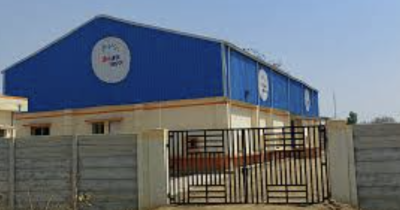
Balaghat district in Madhya Pradesh has been selected as the pilot district under the World’s Largest Grain Storage Plan in the cooperative sector. A 500 MT godown has been completed at Bahudeshiya Prathamik Krishi Saakh Sahakari Society Maryadit, Parswada, and was inaugurated on 24 February 2024. The facility has been hired by the Madhya Pradesh Warehousing and Logistics Corporation. The initiative aims to strengthen decentralised storage at the PACS level and improve post-harvest management.
Pilot Project in Balaghat
The Balaghat project is the first major implementation under the cooperative storage plan. It focuses on Primary Agricultural Credit Societies and other cooperative institutions. The model is designed to create local storage capacity near farms. This helps farmers avoid distress sales and store produce until market prices improve.
Scheme Convergence and Financial Support
The plan is being implemented through convergence of existing central schemes, including:
- Agriculture Infrastructure Fund (AIF)
- Agricultural Marketing Infrastructure Scheme (AMI)
- Sub Mission on Agricultural Mechanisation (SMAM)
- Pradhan Mantri Formalisation of Micro Food Processing Enterprises Scheme (PMFME)
Under AIF, PACS receive interest subvention on loans taken for godown construction. Under AMI, subsidy support is provided for foodgrain storage infrastructure. The loan repayment period under AIF has been extended from 2+5 years to 2+8 years for PACS.
Key Changes in AMI Scheme
The AMI scheme has been revised to improve viability for cooperatives. Margin money requirement has been reduced from 20% to 10%. Construction cost norms have been revised to ₹7,000 per MT for plain areas and ₹8,000 per MT for north-eastern states. Subsidy for PACS has been increased from 25% to 33.33%. This is equal to ₹2,333 per MT in plain areas and ₹2,666 per MT in north-eastern states. An additional subsidy of one-third of the admissible amount is also allowed for ancillary infrastructure such as internal roads, weighbridges and boundary walls.
Significance for Farmers and Food Security
Decentralised storage at village and PACS level can reduce post-harvest losses. It lowers transport costs by reducing repeated movement to distant warehouses and mandis. Farmers can access pledge financing and sell produce at better times. The model is expected to improve price realisation, supply-chain efficiency and food security.
Last Modified: April 28, 2026