
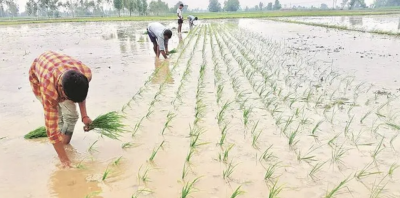
The India Meteorological Department (IMD) forecasted a 90% probability of below-normal monsoon rainfall for 2024. The forecast projects 92% of the Long Period Average (LPA) rainfall, indicating a 10% deficit. Simultaneously, ongoing conflicts in West Asia have disrupted fertiliser imports and supply chains critical to Indian agriculture.
Monsoon Rainfall Forecast
IMD’s prediction of 92% LPA rainfall spans June to September 2024. The forecast includes a 10% deficit compared to the normal monsoon. The rainfall distribution is expected to be uneven, with some regions receiving below-average precipitation. This rainfall pattern influences sowing and crop yields across major agricultural zones.
Impact of West Asia Conflict
The West Asia conflict has affected India’s fertiliser imports, especially urea and phosphate-based fertilisers. India imports nearly 40% of its fertiliser requirements from West Asia. Disruptions in shipping routes and supply chains have led to increased fertiliser prices and shortages in key agricultural states. This affects crop production costs and input availability.
Crop Sowing and Production Outlook
The sowing of kharif crops such as rice, maize, and pulses is vulnerable to below-normal rainfall. States like Maharashtra, Karnataka, and Telangana report delayed sowing due to deficient rains. The reduced fertiliser availability may lower yields of nutrient-intensive crops like wheat and sugarcane. The government has announced buffer stock releases to stabilise fertiliser supplies.
Government Measures and Responses
The Ministry of Agriculture has initiated steps to enhance fertiliser production domestically. Import diversification efforts include sourcing from alternative countries outside West Asia. The government has also launched schemes to promote micro-irrigation and water-use efficiency. Crop insurance schemes have been expanded to cover weather-related losses.
What to Study for UPSC Exams?
- Monsoon Mechanism and Variability
- India’s Fertiliser Industry and Policies
- Water Management in Agriculture
- Geopolitics of West Asia
Monsoon Mechanism and Variability
The Indian monsoon is driven by differential heating between the Indian Ocean and the Asian landmass, causing seasonal wind reversals. Its variability is influenced by phenomena like El Niño-Southern Oscillation (ENSO) and the Indian Ocean Dipole. Monsoon onset and withdrawal dates vary annually, impacting agricultural cycles and water resources.
India’s Fertiliser Industry and Policies
India is the second-largest global consumer of fertilisers, heavily reliant on imports of urea and phosphates. The government controls fertiliser prices through subsidies under the Nutrient-Based Subsidy (NBS) scheme. Domestic production is concentrated in states like Gujarat and Tamil Nadu, with ongoing efforts to boost green ammonia for sustainable fertiliser.
Water Management in Agriculture
India uses nearly 90% of its freshwater for agriculture, relying on groundwater and surface water. Micro-irrigation techniques like drip and sprinkler irrigation improve water efficiency by up to 60%. Watershed management and rainwater harvesting are key strategies to mitigate water scarcity in drought-prone regions.
Geopolitics of West Asia
West Asia, rich in oil and gas reserves, is a strategic region influencing global energy markets. Conflicts often disrupt trade routes like the Strait of Hormuz, critical for global oil supply. India depends on West Asia for energy and fertiliser imports, making it sensitive to regional political instability.
Last Modified: April 18, 2026