
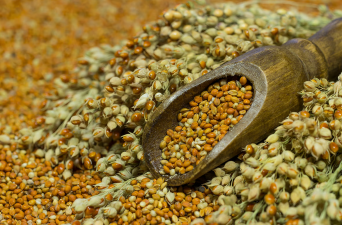
The Government of Odisha has reduced the financial allocation for its flagship millet promotional scheme, the Shree Anna Abhiyan (SAA), for the financial year 2026-27. According to official directives from the Directorate of Agriculture and Food Production, the program’s budget was slashed by nearly 31 per cent, dropping to Rs 415 crore from the Rs 600 crore allocated in the previous fiscal year. This budgetary contraction occurs despite the scheme registering a high fund utilization rate of 93 per cent during the 2025-26 cycle. The policy shift has sparked criticism from farmer groups and civil society organizations who fear a reversal in sustainable agriculture gains.
Operational Impacts of Budgetary Reductions
The fiscal contraction has directly translated into a scale-down of ground-level agricultural support systems across the state.
Contraction of Cultivation and Extension
- Shrinkage of Demonstration Areas: The total land area designated for millet field demonstrations has been reduced by 50,000 hectares. The target dropped from 150,000 hectares down to 100,000 hectares.
- Withdrawal of Support Agencies: Grassroots facilitating agencies, which traditionally managed farmer mobilization, technical training, and seed distribution, have been removed from 13 blocks.
- Erosion of Institutional Capacity: The removal of specialized Community Resource Persons (CRPs) and Farmer Producer Organisations (FPOs) leaves extension work to overstretched departmental officials.
Regional and Crop Inequalities
- Marginalization of Non-Ragi Millets: Out of the remaining 100,000-hectare target, non-ragi minor millets—such as little millet (suan), foxtail millet (kangu), barnyard millet, and sorghum—occupy a minor share of roughly 17,680 hectares.
- Exclusion of Mineral-Rich Belts: The updated annual action plan enforces a financial blackout on key tribal-dominated districts covered by the District Mineral Foundation (DMF), explicitly excluding Keonjhar and eight blocks of Sundargarh from fresh financial allotments.
Challenges in Crop Diversification and Market Linkages
The current crisis highlights broader structural vulnerabilities in Odisha’s transition away from water-intensive paddy monoculture.
Inter-Sectoral Procurement Gaps
While the state infrastructure provides minimum support price (MSP) procurement channels for finger millet (ragi), parallel oilseed and pulse crops face market neglect. There are no state-backed procurement systems for critical rotation crops like groundnut and sunflower. This market gap exposes smallholders to price volatility from private traders, directly depressing overall farm incomes.
Structural Grievances of Smallholders
- High Transition Risks: Small and marginal farmers who shifted away from paddy lack buffer capital to sustain production without state input subsidies.
- Dietary Security Threats: Slashing minor millet incentives harms the subsistence consumption loop of vulnerable tribal communities, threatening local nutritional security.
- Infrastructure Deficits: Processing units and value-addition machinery set up via FPOs risk turning into non-performing assets without sustained state funding.
Comparative Overview of Scheme Revisions
The following table details the key operational changes in the Shree Anna Abhiyan following the 2026-27 budget implementation:
| Indicator / Component | Fiscal Year 2025-26 | Fiscal Year 2026-27 | Percentage Change / Impact |
| Financial Allocation | Rs 600 Crore | Rs 415 Crore | 30.8% reduction |
| Fund Utilization Rate | 93% | Under Evaluation | High demand verified |
| Demonstration Area | 150,000 Hectares | 100,000 Hectares | 33.3% area contraction |
| Field-Level Support | Active FPOs & CRPs | Withdrawn from 13 blocks | Shift to line departments |
| DMF District Funding | Standard inclusion | Financial exclusion | Affected: Keonjhar & Sundargarh |
IASPOINT Booster Facts for UPSC
- Evolution of the Scheme: Originally launched in 2017 as the Odisha Millets Mission (OMM) under the Department of Agriculture and Farmers’ Empowerment, the initiative was later rebranded as the Shree Anna Abhiyan to align with the Union Government’s national terminology for millets.
- Global and National Recognition: The unique architecture of the Odisha Millets Mission—relying on a triad of state agencies, civil society facilitating organizations, and local FPOs—was previously praised as a model framework by NITI Aayog, the Indian Council of Agricultural Research (ICAR), and the FAO.
- Poshak Anaaj Award: The Indian Institute of Millets Research (IIMR), Hyderabad, conferred the national Poshak Anaaj Award on Odisha for its pioneering work in mainstreaming millet consumption and cultivation.
- The Eco-Nutritional Profile of Millets: Millets are C4 crops that require 70% less water than paddy, possess a low carbon footprint, and tolerate extreme temperatures, making them vital tools for climate change adaptation. They are rich in dietary fiber, iron, calcium, and have a low glycemic index.
- District Mineral Foundation (DMF) Linkage: DMFs are statutory bodies set up under the Mines and Minerals (Development and Regulation) [MMDR] Amendment Act, 2015, in districts affected by mining operations. Using DMF funds for millet missions allowed Odisha to combine mineral royalty wealth with tribal nutritional development.