
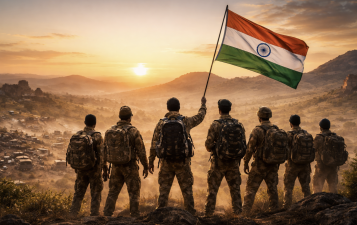
The Indian Army marked the culmination of the first Bharat RanBhoomi Darshan Expedition at the National War Memorial in New Delhi, with Chief of the Army Staff General Upendra Dwivedi flagging in the 3,400-km journey. More than a ceremonial drive, the expedition sought to connect India’s historic battlefields with contemporary national consciousness, reinforcing the link between military heritage, border outreach and national integration.
What Was the Bharat RanBhoomi Darshan Expedition?
4
The expedition, led by the Regiment of Artillery, covered approximately 3,400 kilometres across strategically significant locations along India’s Western Front. It was flagged off on February 3, 2026, from Dwarka and culminated at the National War Memorial.
The route included:
- Dwarka and Bhuj in Gujarat
- Rann of Kutch border areas
- Munabao and Gadra
- Longewala and Jaisalmer
- Bikaner and Ambala
- New Delhi
These locations are closely associated with India’s military history, especially conflicts along the western border.
Strategic Significance of the Western Front
4
The expedition traversed key battlefields such as Longewala, known for its decisive role in the 1971 India-Pakistan War. The Rann of Kutch and Thar Desert sectors have historically witnessed military engagements and remain strategically sensitive zones.
By travelling along border roads and tracks, the expedition also highlighted:
- Improved infrastructure in remote border regions.
- Enhanced connectivity supporting operational readiness.
- Dual-use infrastructure benefiting civilian populations.
Border infrastructure development has emerged as a core pillar of India’s defence preparedness strategy in recent years.
Inter-Forces Participation and National Integration
The 35-member contingent included personnel from:
- Indian Army’s Regiment of Artillery
Such inter-service participation symbolised jointness and coordination — a priority area in India’s defence reforms, especially after the creation of the Chief of Defence Staff framework.
Throughout the journey, the team interacted with Veer Naris, veterans, NCC cadets, students and residents of border areas, reinforcing civil-military bonds and fostering patriotic awareness among youth.
RanBhoomi Darshan as Strategic Outreach
The RanBhoomi Darshan initiative seeks to bring national attention to historically significant battlefields and border regions that form the bedrock of India’s security narrative.
Its broader objectives include:
- Preserving and promoting military heritage.
- Enhancing public awareness of border realities.
- Strengthening emotional integration between border communities and the rest of the country.
- Inspiring future generations towards national service.
By paying homage at war memorials along the route, the expedition reinforced the tradition of honouring India’s fallen soldiers while contextualising contemporary security challenges.
Military Heritage and Nation-Building
The flag-in ceremony at the National War Memorial symbolised continuity between past sacrifices and present commitments. The Memorial itself commemorates soldiers who laid down their lives in post-Independence conflicts and operations.
Such initiatives serve a dual purpose:
- They reaffirm the Armed Forces’ institutional memory and ethos.
- They integrate defence narratives into public consciousness.
In an era of evolving security challenges, cultivating awareness of historical battlefields strengthens national resolve and preparedness.
What to Note for Prelims?
- The Bharat RanBhoomi Darshan Expedition covered 3,400 km from Dwarka to New Delhi.
- It was led by the Regiment of Artillery.
- Longewala is associated with the 1971 India-Pakistan War.
- The National War Memorial commemorates post-Independence military martyrs.
What to Note for Mains?
- Discuss the role of military heritage in nation-building.
- Examine the strategic importance of India’s Western Front.
- Analyse how border infrastructure development strengthens national security.
- Evaluate civil-military engagement initiatives in fostering national integration.