
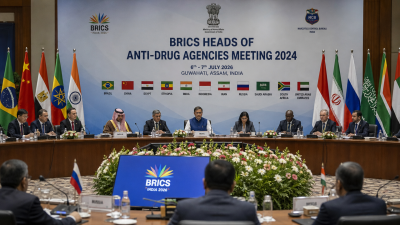
India is hosting the BRICS Heads of Anti-Drug Agencies Meeting in Guwahati, Assam, on 6–7 July 2026. The two‑day meeting is organised by the Narcotics Control Bureau under the Ministry of Home Affairs.
Meeting Focus
- Priority Areas: Combating synthetic drugs and precursor diversion; strengthening intelligence sharing and operational coordination; capacity building and institutional cooperation.
- Threats Discussed: New Psychoactive Substances (NPS), darknet trafficking, and cryptocurrency‑based money flows used by drug networks.
Structure & Participants
- Organiser: Narcotics Control Bureau (NCB), Ministry of Home Affairs — India’s principal drug law‑enforcement agency.
- Participants: Heads and senior officials from 11 BRICS member countries: Brazil, China, Egypt, Ethiopia, India, Indonesia, Iran, Russia, Saudi Arabia, South Africa, UAE.
Key Sessions
- Thematic Count: Six sessions covering digital technology for real‑time interdiction, neutralising darknet markets, tackling NPS, and securing precursor supply chains.
- Operational Tools: Emphasis on intelligence fusion, joint investigations, and technical assistance for forensic and cyber capabilities.
Expected Outcome
- Joint Declaration: Adoption of a declaration to enhance collective counter‑trafficking measures and institutional cooperation across BRICS agencies.
- India’s Input: Presentation of the Vision Document on Narcotics Control (2026–2029) advocating a whole‑of‑government, network‑centric approach.
IASPOINT Booster Facts
- Domestic Law: The Narcotic Drugs and Psychotropic Substances (NDPS) Act, 1985 governs narcotics control in India.
- UN Instruments: Single Convention on Narcotic Drugs (1961), Convention on Psychotropic Substances (1971), and the 1988 UN Convention against Illicit Traffic.
- UN Bodies: United Nations Office on Drugs and Crime (UNODC) and the International Narcotics Control Board (INCB) coordinate global drug control norms.