
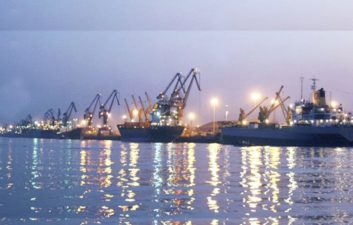
The Cabinet Committee on Economic Affairs approved a new ship repair facility at Vadinar, Gujarat, with a total investment of ₹1,570 crore. The project operates as a joint venture between the Deendayal Port Authority and Cochin Shipyard Limited. It involves the construction of a 650-metre jetty, two floating dry docks, specialised engineering workshops, and supporting marine infrastructure. This facility can accommodate vessels up to 300 metres long, breaking India’s current domestic repair limit of 230 metres. Located along the Gulf of Kutch, the project enhances coastal infrastructure and generates direct and indirect employment.
Project Specifications and Infrastructure Layout
The Vadinar facility introduces modern maritime engineering components to handle larger merchant and commercial vessels.
Structural Components
- Jetty Construction: A dedicated 650-metre jetty will facilitate the berthing and mooring of large vessels during afloat repairs.
- Floating Dry Docks: The integration of two floating dry docks allows the facility to lift vessels out of the water for underwater hull inspections, cleaning, and structural repairs.
- Support Workshops: Onshore workshops will house heavy machinery for marine engineering, electrical servicing, and hull fabrication.
Capacity and Comparison Metrics
| Parameter | Current Indian Capacity | Vadinar Project Target |
| Maximum Vessel Length | 230 metres | 300 metres |
| Total Financial Investment | N/A | ₹1,570 crore |
| Direct Employment Generation | N/A | ~290 jobs |
| Indirect Employment Generation | N/A | ~1,100 jobs |
Strategic Location and Economic Alignment
The geographical placement of Vadinar offers commercial advantages to domestic and international shipping lines.
Natural and Spatial Advantages
- Deep Draft Availability: Vadinar features a natural deep draft that allows high-tonnage vessels to enter without requiring extensive capital dredging.
- Proximity to Major Hubs: The site is close to major Indian ports like Kandla (Deendayal Port) and Mundra, which handle a large share of India’s dry bulk and container traffic.
- Global Route Connectivity: Its position along the west coast provides access to the international shipping lanes crossing the Arabian Sea and the Persian Gulf.
Industrial Impact
- Turnaround Time Reduction: Domestic repair facilities for 300-metre vessels eliminate the need for Indian-owned ships to travel to West Asia or Southeast Asia for routine dry-docking, saving foreign exchange.
- Port-led Industrialisation: The project advances the Sagarmala vision of developing industrial clusters around major port nodes.
Institutional Framework and Execution Partners
Two major public entities under the Ministry of Ports, Shipping and Waterways are executing the project.
Deendayal Port Authority (DPA)
- Profile: DPA manages the major port at Kandla, Gujarat, which is one of the highest cargo-handling ports in India.
- Role: DPA provides the land, waterfront access, and local administrative support at the Vadinar satellite jetty site.
Cochin Shipyard Limited (CSL)
- Profile: CSL is a listed Miniratna Public Sector Undertaking and the largest shipbuilding and maintenance facility in India.
- Role: CSL brings technical expertise in ship repair, dry-dock management, and marine engineering operations to the joint venture.
IASPOINT Booster Facts for UPSC
- Major Ports Authority Act, 2021: This act governs Deendayal Port, providing greater autonomy to major port boards and replacing the older Major Port Trusts Act, 1963.
- Difference between Dry Dock and Wet Dock: A dry dock is a narrow basin that can be flooded and drained to allow standard maintenance on the underwater parts of a ship. A wet dock maintains a constant water level to keep ships afloat during cargo loading and unloading despite tidal variations.
- Gulf of Kutch Marine Ecology: Vadinar lies near the Marine National Park and Sanctuary in the Gulf of Kutch. It is India’s first marine wildlife sanctuary, known for coral reefs, mangroves, and sea cows (dugongs).
- Sagarmala Programme: Launched in 2015, this flagship initiative focuses on port modernisation, port connectivity, port-led industrialisation, and coastal community development.
- Maritime India Vision 2030: This blueprint aims to position India among the top ten shipbuilding and repair destinations globally by expanding dry dock capacities and offering fiscal incentives.