
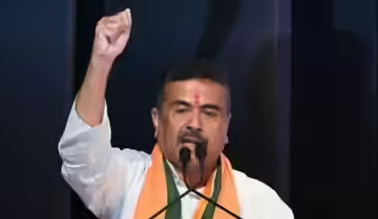
The Government of West Bengal announced the introduction of the Annapurna Bhandar scheme, scheduled to commence operations on 1 June 2026. This new social welfare initiative will provide monthly direct bank transfers of 3,000 rupees to eligible women from low-income households who are permanent residents of the state. The policy decision emerged from the first cabinet meeting of the newly formed state government on 11 May 2026. The Annapurna Bhandar scheme will completely replace the existing Lakshmir Bhandar scheme, restructuring the state’s primary financial assistance delivery mechanism for women.
Structural Objectives and Financial Outlay
The primary objective of the scheme is to enhance the financial independence of women from economically weaker sections and improve the household nutritional status of low-income families.
Shift from Existing Framework
- Replacement of Lakshmir Bhandar: The new initiative replaces the previous Lakshmir Bhandar framework, which provided tiered monthly assistance of 1,000 rupees for general category women and 1,200 rupees for Scheduled Caste (SC) and Scheduled Tribe (ST) women.
- Uniform Financial Enhanced Structure: The Annapurna Bhandar scheme standardizes the monthly assistance to a flat rate of 3,000 rupees for all eligible beneficiaries, substantially increasing the direct cash flow into rural and urban poor households.
Mode of Disbursement
- Direct Benefit Transfer (DBT): The state government will disburse the financial assistance directly into the Aadhaar-linked bank accounts of the beneficiaries, minimizing institutional leakages.
Eligibility Criteria and Verification Architecture
The state government has established strict operational boundaries to identify beneficiaries and prevent misuse of public funds.
Mandatory Criteria
- Residential Status: The applicant must be a permanent resident of West Bengal.
- Gender: The scheme is exclusively applicable to female heads of households or eligible women within the family unit.
- Income Status: The initiative targets families belonging to low-income brackets, utilizing socio-economic data for identification.
Explicit Exclusions and Disqualifications
- Voter List Removals: Women whose names have been officially removed from the active voter lists are ineligible.
- Legal Disqualification: Individuals with pending cases or appeals before citizenship or electoral tribunals cannot apply.
- Nationality: Non-Indian citizens are strictly barred from availing of the benefits.
- Fraud History: Any individual identified as a fraudulent beneficiary under previous state or central welfare programs faces automatic exclusion.
Administrative Implementation Progress
The implementation of the scheme is moving through phased administrative approvals before formal rollout.
Regulatory Status
- Cabinet Approval: The core policy received formal approval from the state cabinet on 11 May 2026.
- Pending Guidelines: As of mid-May 2026, the state government has not issued the formal Government Order (GO). The detailed application procedure, nodal department selection, and standard operating procedures (SOPs) await official notification.
Comparative Matrix of West Bengal Women Welfare Schemes
The table below contrasts the features of the new scheme with preceding and concurrent women-centric initiatives in the state.
| Scheme Name | Target Audience | Financial Benefit Structure | Current Operational Status |
| Annapurna Bhandar | Low-income permanent resident women | 3,000 rupees per month uniformly | Scheduled to launch on 1 June 2026 |
| Lakshmir Bhandar | Women aged 25–60 years | 1,000 rupees (General) / 1,200 rupees (SC/ST) per month | Set to be replaced by Annapurna Bhandar |
| Kanyashree Prakalpa | Adolescent girls (School/College students) | Annual scholarship of 1,000 rupees; one-time grant of 25,000 rupees | Operational (Focuses on preventing child marriage) |
| Rupashree Prakalpa | Low-income adult women | One-time grant of 25,000 rupees for marriage expenses | Operational |
IASPOINT Booster Facts for UPSC
- Article 15(3) of the Indian Constitution: This article allows the State to make special provisions for women and children, serving as the constitutional foundation for gender-specific welfare schemes like Annapurna Bhandar.
- Directive Principles of State Policy (DPSP): These financial assistance schemes align with Article 39 of the Constitution, which directs the State to secure an adequate means of livelihood for all citizens and ensure wealth concentration does not harm the common good.
- Direct Benefit Transfer (DBT) Ecosystem: The DBT mechanism utilizes the “JAM Trinity”—Jan Dhan bank accounts, Aadhaar biometric verification, and Mobile numbers—to eliminate intermediaries in public financial management.
- National Strategy for Financial Inclusion: The integration of unbanked women into formal banking systems via DBT schemes supports the financial inclusion goals set by the Reserve Bank of India (RBI).