
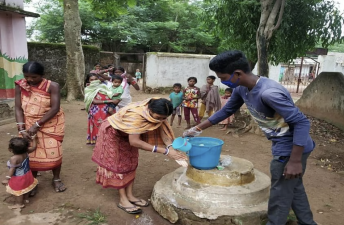
India presented its rural drinking water and sanitation model to a visiting Sri Lankan parliamentary delegation, denoting the scale, design and outcomes of the Jal Jeevan Mission and the Swachh Bharat Mission-Grameen. The interaction focused on India’s decentralised implementation model, long-term sustainability, and the role of local institutions in delivery.
Jal Jeevan Mission Progress
The Jal Jeevan Mission was launched in 2019 to provide functional tap water connections to rural households. At the time of launch, only about 17 per cent of rural households had tap water access. This has now risen to around 82 per cent, covering more than 15 crore households. The mission has become one of India’s largest rural infrastructure programmes.
Shift Towards Sustainability
The Cabinet has approved an extension of the mission till 2028 under JJM 2.0. The new phase places greater emphasis on:
- Operation and maintenance of water supply systems.
- Source sustainability and recharge measures.
- Community participation in water management.
- Long-term service delivery rather than only new infrastructure.
Swachh Bharat Mission-Grameen Outcomes
The Swachh Bharat Mission-Grameen was launched in 2014 to eliminate open defecation in rural India. The programme achieved nationwide Open Defecation Free status by October 2019. More than 12 crore household toilets were built under the mission. The second phase now focuses on solid and liquid waste management and on helping villages achieve ODF Plus status.
Water Quality and Bilateral Cooperation
The Sri Lankan delegation raised concerns about heavy metal contamination in water sources, including mercury, and the high cost of treatment technologies. It noted that treated water is often used for multiple household purposes, increasing the financial burden. The discussion underlined the need for affordable purification solutions and deeper India-Sri Lanka cooperation in water and sanitation management.
Last Modified: April 29, 2026