
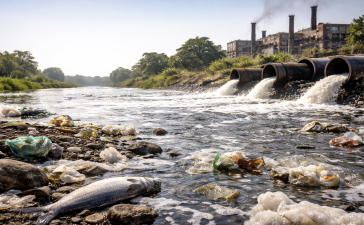
Carbon Capture and Utilisation (CCU) has gained attention in India as a key technology to reduce carbon dioxide (CO₂) emissions. With India being the third-largest emitter globally, CCU offers a way to lower emissions from industries that are hard to decarbonise. The technology captures CO₂ from sources such as power plants and factories and converts it into valuable products like fuels, chemicals, and building materials. This approach supports India’s net-zero target for 2070 and promotes a circular, low-carbon economy.
India’s Need for Carbon Capture and Utilisation
India’s industrial sectors such as power generation, cement, steel, and chemicals contribute heavily to CO₂ emissions. Many of these industries cannot easily switch to renewable energy due to technical and economic constraints. CCU provides a solution by recycling captured carbon into usable products. This reduces emissions and creates new economic opportunities. It aligns well with India’s goals to balance growth with environmental sustainability.
Current Status of CCU in India
India has started supporting CCU through government research funding and policy roadmaps. The Department of Science and Technology has developed plans to advance CCU technologies. The Ministry of Petroleum and Natural Gas has proposed a draft 2030 roadmap for Carbon Capture, Utilisation, and Storage (CCUS). Private companies like Ambuja Cements and JK Cement are collaborating with research institutes to pilot CCU projects. Organic Recycling Systems Limited is leading bio-CCU efforts to convert biogas CO₂ into bio-alcohols and chemicals.
Global Perspectives on CCU
The European Union integrates CCU into its Bioeconomy Strategy and Circular Economy Action Plan. Major corporations such as ArcelorMittal and Mitsubishi Heavy Industries are trialling CCU technologies in Europe. The United States promotes CCU through tax credits and funding focused on CO₂-derived fuels and chemicals. The UAE is developing CO₂-to-chemicals hubs using green hydrogen. These global efforts show the growing importance of CCU in reducing industrial emissions.
Challenges and Risks for CCU in India
Scaling CCU in India faces several challenges. The process is energy-intensive and costly, making CCU products less competitive without policy support. Infrastructure gaps such as limited industrial clusters and CO₂ transport networks hinder seamless integration. Uncertain standards and lack of certification reduce investor confidence and market demand. Effective implementation of roadmaps and clear regulatory frameworks are essential to overcome these obstacles.
Topics for Prelims:
Carbon Capture and Utilisation (CCU)
- CCU captures CO₂ and converts it into fuels, chemicals, and materials.
- It differs from carbon capture and storage (CCS) by reusing CO₂.
- CCU targets hard-to-abate industrial sectors.
- India aims for net-zero emissions by 2070 using CCU among other tools.
- CCU supports circular economy and industrial innovation.
India’s Industrial Emissions
- Power, cement, steel, and chemical sectors are major CO₂ emitters.
- These sectors are difficult to decarbonise with renewables alone.
- Government funds CCU research and pilots in collaboration with industry.
- Private sector initiatives include Ambuja Cements and JK Cement projects.
- Bio-CCU converts biogas CO₂ into bio-alcohols and specialty chemicals.
Global CCU Initiatives
- EU Bioeconomy Strategy promotes CCU for sustainability and circularity.
- ArcelorMittal and Mitsubishi trial CO₂ conversion to carbon monoxide.
- US supports CCU with tax credits for CO₂-derived fuels and chemicals.
- UAE develops CO₂-to-chemicals hubs using green hydrogen.
- Global cooperation accelerates CCU technology development.
Questions for UPSC:
- Critically discuss the role of Carbon Capture and Utilisation (CCU) in India’s strategy to achieve net-zero emissions by 2070.
- Examine the challenges of scaling CCU technologies in developing economies and analyse possible policy measures to overcome them.
- What are the environmental and economic implications of integrating CCU with circular economy principles? Point out the global trends in CCU adoption.
- Estimate the impact of industrial emissions on climate change and analyse how innovations like CCU can transform hard-to-abate sectors.
Answer Hints:
1. Critically discuss the role of Carbon Capture and Utilisation (CCU) in India’s strategy to achieve net-zero emissions by 2070.
- India is the world’s third-largest CO₂ emitter, mainly from power, cement, steel, and chemical industries.
- Many industrial processes are hard to decarbonise using renewables alone, making CCU vital.
- CCU captures CO₂ and converts it into fuels, chemicals, and materials, reducing net emissions.
- It supports India’s 2070 net-zero target by enabling emission reductions in hard-to-abate sectors.
- CCU promotes circular economy principles by recycling carbon into valuable products.
- Government roadmaps and private sector pilots indicate growing institutional support for CCU.
2. Examine the challenges of scaling CCU technologies in developing economies and analyse possible policy measures to overcome them.
- High costs and energy intensity of capturing and converting CO₂ limit commercial viability.
- Insufficient infrastructure – lack of industrial clusters, CO₂ transport, and integration facilities.
- Unclear standards, certification, and market signals reduce investor confidence.
- Developing economies often lack adequate R&D funding and technology access.
- Policy measures – subsidies, tax credits, and incentives to improve cost competitiveness.
- Establishing regulatory frameworks, infrastructure development, and public-private partnerships.
3. What are the environmental and economic implications of integrating CCU with circular economy principles? Point out the global trends in CCU adoption.
- Environmental benefits – reduces atmospheric CO₂ and lowers fossil fuel dependency.
- Economic gains – creates new value chains from waste CO₂, encouraging industrial innovation.
- Supports resource efficiency by turning emissions into feedstocks for chemicals, fuels, and materials.
- Global trends – EU integrates CCU in bioeconomy and circular economy strategies.
- US promotes CCU via tax credits; UAE develops CO₂-to-chemicals hubs with green hydrogen.
- Corporate trials (e.g., ArcelorMittal, Mitsubishi) show industrial-scale potential of CCU.
4. Estimate the impact of industrial emissions on climate change and analyse how innovations like CCU can transform hard-to-abate sectors.
- Industrial sectors (power, cement, steel, chemicals) contribute to global CO₂ emissions.
- These emissions drive climate change through increased greenhouse gas concentrations.
- Hard-to-abate sectors face technological and economic barriers to decarbonisation.
- CCU captures CO₂ emissions and converts them into useful products, reducing net emissions.
- Innovations in CCU enable emission reductions without halting industrial activity.
- CCU encourages sustainable industrial growth aligned with climate goals and circular economy.