
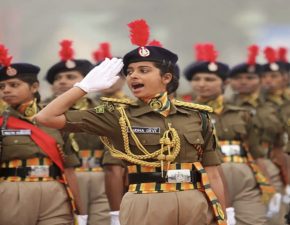
The Central Government notified the Central Armed Police Forces (General Administration) Act, 2026, on April 9, 2026, following the assent of President Droupadi Murmu. This legislation creates a unified legal framework for the administration of five major paramilitary forces in India. It aims to regulate recruitment, promotion, and service conditions for Group A General Duty officers in the CRPF, BSF, CISF, ITBP, and SSB. The Act seeks to replace fragmented force-specific rules with a single system to improve operational synergy and reduce litigation.
Scope and Forces Covered
The Act applies to five key paramilitary forces under the Ministry of Home Affairs: the Border Security Force (BSF), Central Reserve Police Force (CRPF), Central Industrial Security Force (CISF), Indo-Tibetan Border Police (ITBP), and Sashastra Seema Bal (SSB). Notably, the National Security Guard (NSG) and Assam Rifles are excluded from this legislation. The law centralises administrative control, aiming for uniformity in service conditions and career progression.
Key Provisions and Deputation Quotas
The Act codifies deputation quotas for Indian Police Service (IPS) officers at senior leadership levels. It reserves 50% of Inspector General (IG) posts, a minimum of 67% of Additional Director General (ADG) posts, and 100% of Special Director General and Director General (DG) posts for IPS officers. This formalises the deputation system, limiting cadre officers’ promotion prospects beyond the IG rank. The Centre is empowered to frame rules that override conflicting laws, administrative orders, or court judgements for administrative uniformity.
Legal and Personnel Challenges
The Act overrides a Supreme Court verdict from May 2025, which had directed the government to reduce IPS deputation at IG level to improve cadre officers’ career growth. Retired CAPF personnel protested the notification, citing discrimination against approximately 13,000 Group A cadre officers facing stagnation in promotions. Several associations have indicated plans to challenge the Act’s constitutional validity, arguing it violates the right to equality by creating dual service rules for officers performing similar duties.
Government’s Rationale and Administrative Impact
The Ministry of Home Affairs justifies the Act as necessary to eliminate administrative confusion caused by multiple lawsuits over seniority and to standardise transfer and posting policies. It also asserts that maintaining IPS leadership at senior levels ensures better coordination between the Centre and states and aligns paramilitary forces with national security priorities. The Act aims to enhance operational efficiency in sensitive border areas through a unified command structure.
What to Study for UPSC Exams?
- Paramilitary Forces in India
- Indian Police Service Structure
- Administrative Law in India
- Supreme Court Judgements on Service Matters
- Centre-State Relations in Security
Paramilitary Forces in India
India’s paramilitary forces include BSF, CRPF, CISF, ITBP, and SSB, primarily under the Ministry of Home Affairs. They perform border security, internal security, and industrial protection roles. The NSG and Assam Rifles operate under separate frameworks. These forces have distinct recruitment, training, and operational mandates but often cooperate during national emergencies and counter-insurgency operations.
Indian Police Service Structure
The IPS is an All India Service responsible for policing and internal security. Officers are recruited via UPSC and undergo training at the Sardar Vallabhbhai Patel National Police Academy. IPS ranks range from Assistant Superintendent of Police to Director General of Police, with deputations possible to paramilitary and central agencies. The cadre system ensures state and central postings.
Administrative Law in India
Administrative law governs the activities of government agencies and ensures lawful exercise of power. It includes principles like natural justice, delegated legislation, and judicial review. The Central Administrative Tribunal adjudicates service disputes of government employees. It balances efficient governance with protection of citizens’ rights against arbitrary administrative actions.
Supreme Court Judgements on Service Matters
The Supreme Court of India has ruled on service conditions, promotions, and deputations to uphold fairness and constitutional rights. Landmark judgments address reservation in promotions, seniority disputes, and administrative transparency. These rulings shape public employment policies and often resolve conflicts between different service cadres.
Centre-State Relations in Security
Security is a concurrent subject in India, requiring coordination between Union and states. The Centre controls paramilitary forces and internal security during emergencies. States manage police forces and law and order. Mechanisms like the Inter-State Council and joint intelligence setups facilitate cooperation. Conflicts arise over jurisdiction and deployment authority.
Last Modified: April 11, 2026